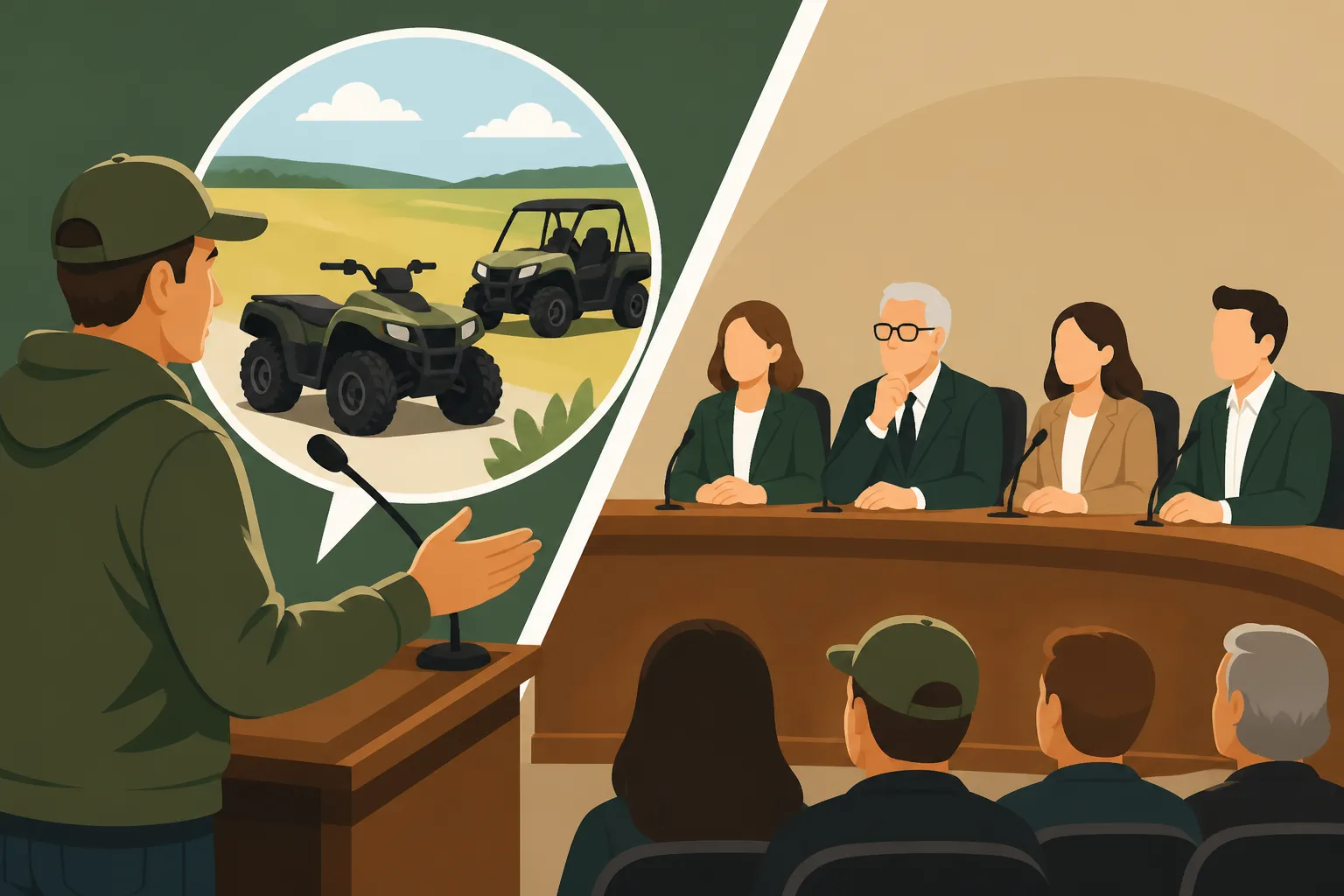
Speaking at a Council Meeting About Quads
When a rural municipality says quads cannot use a road, it can be hard to know whether the rule applies everywhere, to one road, or only to certain machines. A council meeting gives residents a chance to ask for clarity and present a practical alternative. This guide explains how to prepare, make a focused request, and follow up on ATV and UTV road-use concerns in Saskatchewan.
Start With the Rule You Want Council to Review
Find out what is actually prohibited
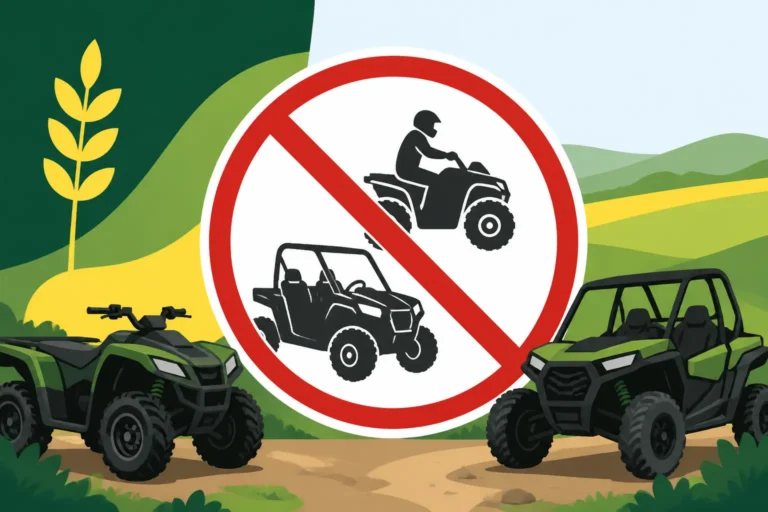
Before asking council to change a rule, identify the rule and the area it covers. A municipality may have a bylaw that allows ATV use on some roads, restricts it to particular routes, or prohibits it in certain places. A road sign, a municipal bylaw, and a general provincial rule are not necessarily the same thing, so avoid treating a neighbour’s experience as proof that the same rule applies on every road.
Start with the municipality’s website or office and ask for the current bylaw number, the relevant section, and a map or written description of the affected roads. If your concern is a grid road, clarify whether the road is under the municipality’s jurisdiction and whether the restriction covers the travelled portion, the ditch, or both. The details matter: “ATVs are banned around here” may mean something quite different from a bylaw that prohibits riding on named streets or during particular hours.
For background, read Saskatchewan Municipalities With ATV Bylaws and Saskatchewan Bylaws That Permit Road Riding alongside Saskatchewan Bylaws That Prohibit Riding. These topics can help you frame the right questions, but the municipality’s own current rules are what matter for the roads you want to discuss.
Ask the municipal office before the meeting
You do not need to wait until a council meeting to find out how public input works. Contact the administrator or municipal office and ask how to get an item onto the agenda, whether residents can speak during a designated public-input period, and whether written submissions are accepted. Ask about any deadline, speaking-time limit, or requirement to provide materials in advance.
Be specific about your concern. For example: “I would like to ask council to review ATV access on the road between the north grid and the recreation area” is more useful than “I want to talk about quads.” You can also ask whether the municipality has previously considered the issue, what department or committee handles road-use questions, and whether staff can provide the relevant bylaw before the meeting.
If your question concerns a particular grid road, Asking Your Rural Municipality About a Grid Road offers a useful checklist for the kinds of details to pin down. It is also worth reviewing Questions Worth Asking a Rural Municipality so you can use your time well and leave with clear next steps.
Build a Practical Case for ATV and UTV Access
Make one clear, answerable request
Councillors are more likely to engage with a request they can understand and consider. Decide what outcome you are asking for before you speak. You might request a review of a specific route, a trial period, clearer signs, a public map of permitted roads, or a staff report on safety and enforcement. You are not required to arrive with a finished bylaw, but you should be able to state what you want council to do next.
Keep the request narrow enough to evaluate. “Let every quad ride anywhere” is broad and likely to raise concerns about safety, noise, dust, road damage, and enforcement. A more workable proposal might identify a short connection between two existing routes, specify the kinds of machines or hours involved, and ask council to consult residents along that route before deciding.
A focused request also gives councillors something concrete to discuss. For example, a resident who wants to connect a rural trail to a fuel stop could explain where riders currently unload, what gap the proposed route would address, and why the connection matters. If council is not ready to approve access, ask whether it would consider gathering information or reviewing the issue at a later meeting.
Bring evidence, not just frustration
It is understandable to feel dismissed when a rule makes a familiar trip difficult, especially if people have been using a route for years. Still, an effective presentation separates what you know from what you suspect. Bring a simple map with the proposed route marked, photographs of relevant signs or road conditions, and a short explanation of when and why riders would use the connection.
If safety is part of your argument, describe the actual problem. Are riders using a busier road because there is no legal connection? Is there a visibility issue at an intersection? Would a designated route keep machines away from a playground, beach, or busy residential street? Avoid saying that a proposal is “completely safe.” Instead, identify the risks and suggest ways they might be managed, such as a lower speed limit, restricted hours, designated crossings, or seasonal review.
Be careful with equipment claims. Items such as mirrors, lights, windshields, or protective accessories may be relevant to a safety discussion, but adding equipment does not automatically make an ATV or UTV legally permitted on a road. If you mention products from a company such as SuperATV, use them only as examples of equipment to evaluate, not as proof that a machine meets Saskatchewan or municipal requirements. You can also ask council what equipment standards it would expect riders to meet and how those standards would be checked.
| What you want council to consider | Helpful information to bring | A practical question to ask |
|---|---|---|
| Access on a specific road | Map, road name, photos, and the bylaw section | Can staff confirm who controls this road and what rule applies? |
| A short route connection | Start and end points, purpose, and likely times of use | Would council consider a limited route or trial period? |
| Better signs or public information | Photos of existing signs and examples of confusing locations | Could the municipality publish a map or clarify the signs? |
| Safety conditions | Intersections, visibility concerns, traffic patterns, and possible controls | What safety measures would council want assessed? |
| Consistent enforcement | Examples of unclear boundaries or conflicting information | How can residents find out which roads are open? |
Address concerns directly and respectfully
Some residents may worry about noise, fast driving, trespassing, road damage, or inexperienced riders. Those concerns should not be brushed aside. Acknowledging them does not weaken your position; it shows that you understand the impact a rule change could have on people who live along the route.
Respond with practical questions rather than dismissive assurances. If noise is a concern, ask whether hours or routes could be limited. If road damage is raised, ask what information the municipality would need to assess the road’s condition. If residents fear riders will leave the road and enter private land, explain how signs, route maps, and clear boundaries could help—and acknowledge that permission is still needed to ride on private property.
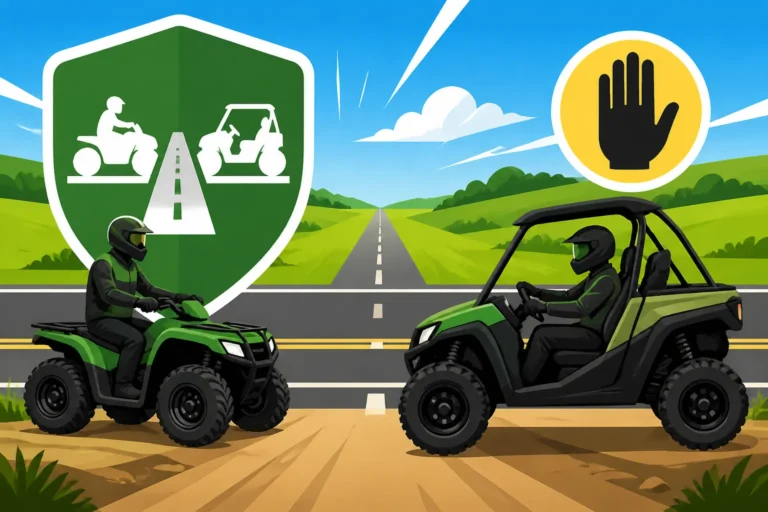
If you are discussing the difference between a local road-use rule and the broader provincial framework, review Saskatchewan ATV Road Rules Explained. Keep your comments tied to the decision council can actually make. A municipal proposal should not imply that permission to use one road overrides other legal requirements, landowner permission, or restrictions that apply elsewhere.
Speak Clearly at the Council Meeting
Use a short structure you can follow under pressure
It is normal to feel nervous speaking in public, especially when the issue affects your family, property, or community. A written outline can keep you from getting pulled into every side debate. Aim to cover four points: who you are, what rule or route you are discussing, what you are asking council to do, and why your proposal could benefit the community.
A simple opening might sound like this: “My name is ____. I live near ____. I am asking council to review ATV access on [specific road or route]. I understand the concerns about safety and disruption, and I would like council to consider [specific next step].” Then give two or three pieces of evidence. You do not need to read a long speech or recite every detail you have collected.
Finish by asking for a clear action. For example, ask whether council will direct staff to review the bylaw, bring back a route map, consult affected residents, or provide a written answer about the rule. If you only say that the current situation is frustrating, the meeting may end without anyone knowing what response you are seeking.
Keep your tone firm, calm, and useful
A council meeting can feel formal, but you do not need to speak like a lawyer. Be courteous, use the chair’s preferred form of address if one is provided, and avoid interrupting councillors or other residents. If someone disagrees with you, let them finish and respond to the concern rather than attacking the person.
Use plain language and avoid making claims you cannot support. If you are unsure whether a road is municipal, say so and ask staff to confirm. If you do not know the exact bylaw section, bring the copy you received or ask the administrator to identify it. A confident but inaccurate statement can distract from a solid argument.
If the discussion turns to vehicle equipment, explain the distinction between equipment and permission to ride. A windshield or lighting accessory from SuperATV, or any other supplier, does not determine whether a road is open to ATVs. If council is considering safety conditions, ask it to identify the applicable requirements and how residents can verify them before riding. This keeps the discussion grounded in the rule, not a product recommendation.
Follow Up After Council Responds
Record the answer and the next step
After the meeting, write down what council decided, what staff agreed to investigate, and any follow-up date or information requested. If you are not sure whether a motion was passed or whether the issue was simply discussed, ask the municipal office for clarification. Minutes may help, but a short follow-up email can resolve a misunderstanding sooner.
If council asks for more information, provide it in a concise format. A one-page summary with a map, the requested action, and a few supporting points is easier to review than a large collection of messages and photographs. If residents along the proposed route are affected, consider asking whether the municipality wants their views collected formally rather than assuming that one speaker represents the whole area.
You may also want to ask whether the municipality will post its answer or any route changes publicly. If the response is that the bylaw already prohibits the use you proposed, ask which section applies and whether there is a process for requesting an amendment. If council declines to change the rule, you can still ask for clearer signs, a public explanation, or a consistent way for residents to check road access.
Keep riding decisions separate from the policy discussion
A pending request is not permission to ride. Until the municipality confirms a route is allowed, follow the rules currently in force. Check the exact road, posted signs, relevant bylaws, and any other access restrictions before unloading a machine. A council conversation, a neighbour’s informal approval, or an accessory fitted to a machine does not replace legal authorization.
That distinction is especially important when a proposed road route connects to private land, a recreation area, or a trail. Ask who controls each section and whether separate permission is required. Where a sign or local rule is unclear, contact the municipality before riding rather than relying on what appears customary.
If your proposal concerns a restriction sign, Saskatchewan Sign Requirements for Prohibitions may help you understand what to ask, but confirm the details with the municipality responsible for the road. A clear written answer is more useful than guessing from a sign viewed from the seat of a machine.
When you need to discuss equipment as part of a safety proposal, keep the focus on objective requirements. SuperATV products may be one example to examine when comparing possible accessories, but council’s decision should rest on applicable rules, route conditions, and enforceable standards—not a brand name. The same principle applies to any manufacturer or retailer.
Disclaimer
This article is for general informational purposes only and does not constitute professional advice. Laws, prices and regulations vary by location and change over time. Consult a qualified professional for guidance on your specific situation.