Staying on Established Trails in Fire Season
Fire season changes how a Saskatchewan ATV or UTV ride should be planned. Established trails can reduce the risk of damaging land or starting a fire, but a visible track is not proof that riding is allowed or safe that day. Here’s how to check access, prepare your machine, and ride responsibly when conditions are dry.
What staying on an established trail does and does not mean
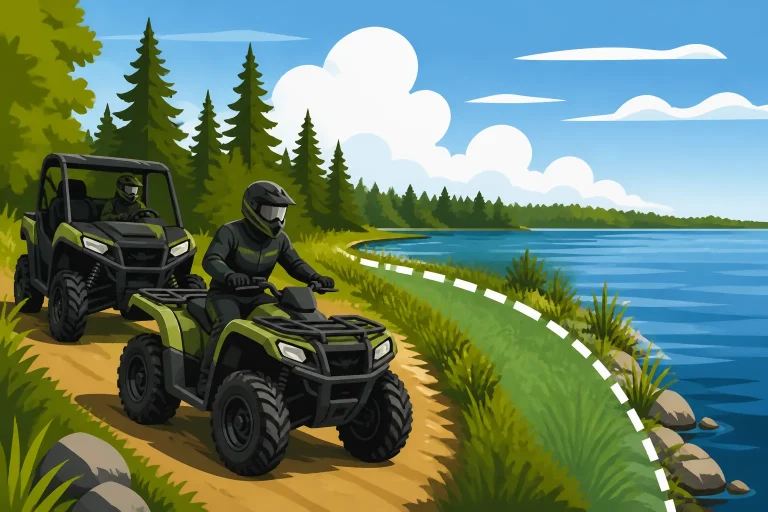
An established trail is a route that is recognized for use in the area, rather than a new track made by cutting across vegetation or choosing an unmarked shortcut. Staying on it helps limit disturbance to plants, soil and wildlife habitat. It can also make it easier to follow a route that managers or local clubs expect riders to use.
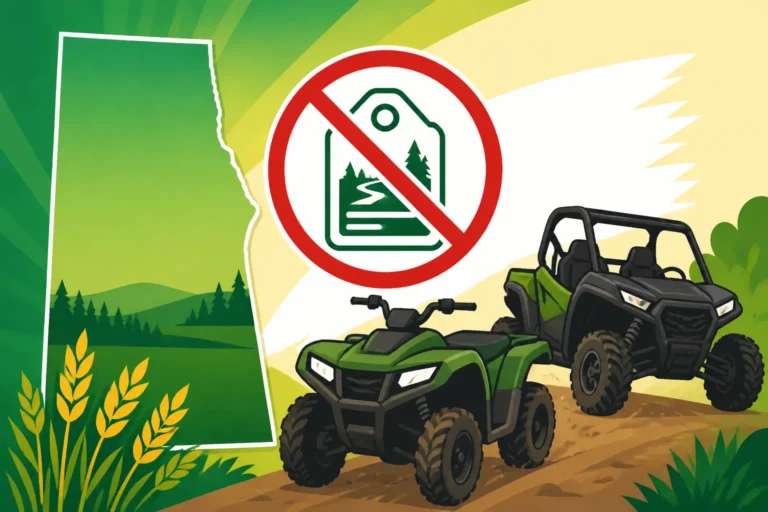
But “established” does not automatically mean open. A trail might cross private land, an occupied Crown land area, a grazing lease, or a park with specific rules. It could be closed temporarily because of fire danger, damage, maintenance or another land-management decision. A track on a map, an old tire mark or a route shared online is not enough to confirm current permission.
Before you leave, establish three things:
- Who manages the land and route? Rules can differ between provincial parks, Crown land, municipal areas and private land.
- Is riding permitted on that exact route? Check for posted restrictions, closures, permits and landowner requirements.
- Is it open today? Fire conditions and temporary restrictions can change after you have planned a trip.
Saskatchewan’s wildfire season is generally described as running from April through October, but fire danger and restrictions are not identical across the province or throughout that period. A season date is not an all-clear for any specific trail. Review Saskatchewan Wildfire Season Rules for Riders and check the latest information for the riding area before hauling your machine.
The same distinction matters on Crown land. Riding permission depends on the location and applicable restrictions; an existing trail does not necessarily give every rider access. Read Saskatchewan Crown Land Riding Explained and confirm whether the route is open. On park land, designated routes and park-specific rules may apply, so consult Saskatchewan Park Regulations for Machines rather than assuming a trail used elsewhere is allowed inside the park.
| What you see | What it tells you | What to do |
|---|---|---|
| A trail on a map | A route may be mapped or recognized | Confirm it is open and allowed for your vehicle |
| Tire tracks or a worn path | Someone has used the route | Do not treat tracks as permission |
| A trailhead sign | The route may have local instructions or restrictions | Read the sign and follow any posted conditions |
| A closure notice | Access is restricted in the area described | Do not ride past the closure or seek a shortcut around it |
| A club or municipal trail marker | The route may be maintained or identified locally | Check current access rules with the responsible organization |
If you cannot confirm access, choose a route with clear permission instead of testing the boundary. A detour around a closure can cause more damage than turning back, and it may put you on land where riding is not allowed.
Check fire restrictions and trail conditions before you haul
A good fire-season plan begins with current information, not just a map saved on your phone. Look for wildfire updates and fire restrictions that apply to the area you plan to visit. Restrictions may affect access to land, trail use, vehicle travel, campfires or other activities. The details can vary, so check the exact location and read the full notice rather than relying on a headline or a message forwarded by someone else.
Use Saskatchewan Fire Ban Lookups to help locate relevant updates, and check with the land manager, park office, municipality or trail organization responsible for the route. If a local office or club has posted an update, verify that it applies to your planned trail and travel dates. A restriction in one area does not tell you what applies in another, and a trail that was open last week may not be open now.
Also check for ordinary trail problems that can become more serious in dry conditions. Recent wind, storms, maintenance work or wildfire activity may leave debris, damaged signs, blocked routes or unsafe sections. Saskatchewan Trail Conditions Before You Haul can help frame what to check before setting out. If information is unclear, contact the office or organization responsible for the land rather than assuming a route is open.
Use a simple pre-ride check
Before loading the ATV or UTV, confirm:
- The trail is permitted for your type of machine.
- The route is open on the date you plan to ride.
- Any required permit or landowner permission is in place.
- Fire restrictions do not prohibit travel or access.
- The trailhead and route are suitable for your group and vehicle.
- You have a backup plan that does not depend on riding around a closure.
Keep a map available even if you use a navigation app. Cell service may be limited, and the phone’s route line may not show a new closure or a private-land boundary. Save information for offline use when possible, and make sure everyone in the group understands where the planned route ends. If a sign or barrier at the trailhead conflicts with an older map, follow the current restriction and clarify it with the responsible authority.
A useful plan has a clear turn-around point. If conditions worsen, smoke reduces visibility, a trail is blocked, or a restriction is announced, the group should know how to return without improvising a route through vegetation. Share the plan with someone who is not riding, including the area you expect to visit and when you expect to return.
Reduce ignition risk from your machine and riding habits
An ATV or UTV can encounter dry grass, brush and other combustible material during an ordinary ride. The machine itself also has hot components, and debris can collect near areas that become hot during operation. Fire-season care therefore involves both preparing the machine and avoiding actions that create unnecessary heat or sparks.
Before riding, inspect the machine for dry grass, leaves, mud and other material around the exhaust, engine area, skid plates and underbody. Clear debris safely while the machine is cool, and repeat the inspection during the day, especially after riding through tall grass or brush. If debris is packed into a hard-to-reach area, stop and deal with it rather than continuing until it accumulates further.
Keep the machine maintained according to its manufacturer’s instructions. Look for damaged wiring, loose parts, fluid leaks or other issues that could create a hazard. A spark-arresting system should be in good condition where required or recommended for the location and machine. For background, see Saskatchewan Spark Arrestor Guidance, then confirm any specific requirements with the land manager or applicable authority.
Riding style matters too. Stay on the established route, avoid driving through dry vegetation, and do not spin tires or take unnecessary detours. Do not park a hot machine in dry grass or leave it idling beside combustible material. If you stop, choose a clear, stable spot away from vegetation that could contact hot components. These are sensible precautions, not a replacement for checking the rules that apply to the land.
Carry useful equipment and know what it can do
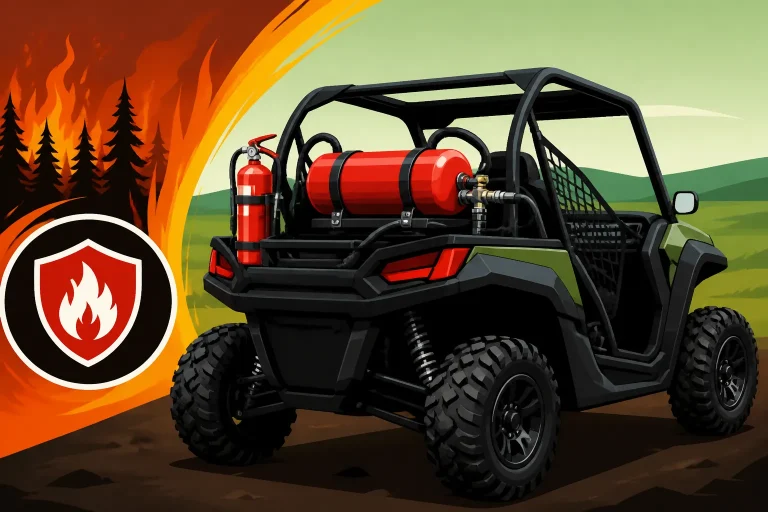
A basic emergency kit should match the ride, group and location. Consider carrying a charged phone, navigation tools that work offline, a first-aid kit, drinking water, and equipment suitable for dealing with a small developing fire if it is safe to do so. A shovel and an appropriate, serviceable fire extinguisher may be useful additions, but carrying them does not authorize riding in a closed area or remove the need to follow official restrictions.
If you purchase a compact shovel or extinguisher through a retailer such as Amazon, check the product’s suitability, condition and instructions before relying on it. A tool that is too small, damaged or inaccessible may not help when needed. Store equipment securely so it cannot shift, and make sure riders know where it is.
Do not put yourself or your group at risk trying to fight a fire that is spreading or beyond your ability to control. Move away from danger and contact emergency services when safe. Provide a clear location and useful details about access, smoke or visible flames. Do not return to the trail to retrieve gear if doing so would take you toward a fire.
For riders looking for more detail on the duty to prevent fire hazards, Saskatchewan Wildfire Act Duties for Riders is a useful next read. Treat legal duties and practical precautions separately: follow the applicable rules, and take additional sensible steps to reduce risk.
What to do when a trail is closed or conditions change
A closure is a boundary, not an invitation to find a way around it. Do not go past a barrier, remove a sign, or cut a new route to reach the other side. Turn back using the route you know is open. If your planned exit is blocked, use only an authorized alternative; when in doubt, contact the responsible land manager or emergency services if the situation requires it.
Trail conditions can change while a group is out. Smoke, gusting wind, new restrictions, a fire nearby or an official closure may all require a change of plan. Agree before the ride that anyone can call for a stop or turn-around, and that the group will stay together while leaving. Avoid splitting up to search for another way through.
If you see smoke or a possible fire, prioritize people and leave the area by a safe route. Do not ride toward the smoke to investigate. Once clear, report what you observed to the appropriate emergency contact and give the most precise location you can, such as a trail name, nearby road, landmark or map coordinates. If you are unsure whether a report has already been made, reporting a credible concern is safer than assuming someone else has done it.
After the ride, check the machine again for trapped vegetation or other debris. Clean it in a suitable place, not by driving through brush or using a route that could spread contaminants into another riding area. If the trail was damaged or signage was missing, report the issue to the club, park office, municipality or land manager responsible for it. Do not repair signs, move barriers or alter the route unless you have permission.
The practical rule is straightforward: verify access, follow current restrictions, keep the machine clear of combustible debris, and stay on the route that is actually open. If any part of that plan stops being true, turn around rather than improvising.
Disclaimer
This article is for general informational purposes only and does not constitute professional advice. Laws, prices and regulations vary by location and change over time. Consult a qualified professional for guidance on your specific situation.