Snorkels for a Northern Creek
A northern creek can look shallow and harmless until the bottom drops away, the current pushes your ATV sideways, or water reaches the air intake. A snorkel can reduce the chance of water entering key components, but it does not make a machine waterproof or every crossing safe. This guide explains what snorkels do, how to prepare, and when turning back is the better call.
What a snorkel does and does not protect
How an ATV snorkel works
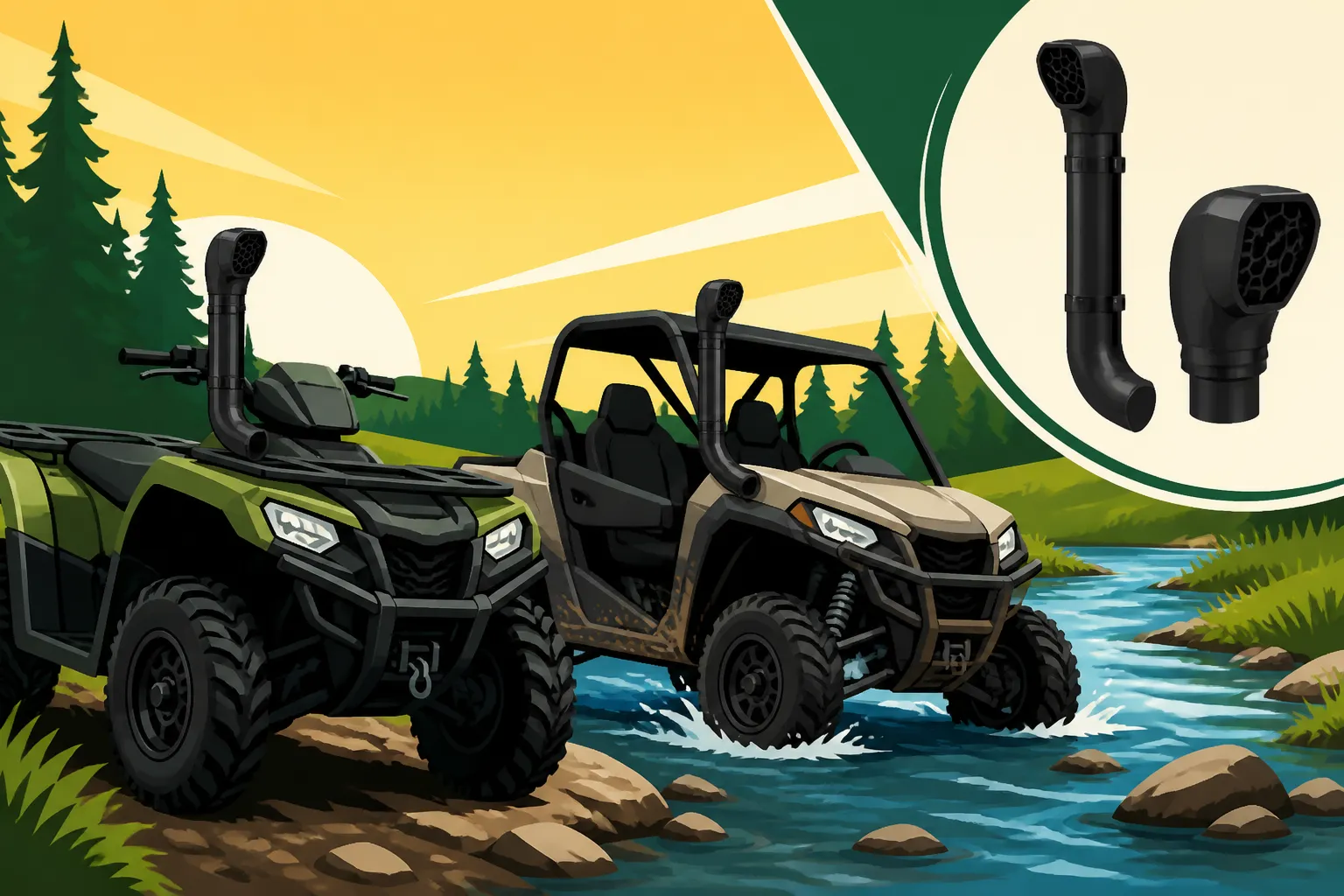
An ATV or UTV snorkel raises the openings for parts of the machine that need air, most importantly the engine intake and often the transmission’s belt housing. If water rises around the lower body, these higher openings can help keep water from being drawn into the engine or reaching the belt through its ventilation system.
The important word is help. A snorkel only works as intended when its components are routed, sealed and maintained properly. A loose connection, cracked hose, poorly sealed airbox, or intake opening positioned too low can undermine the whole setup. A snorkel is not a guarantee against water damage.
Nor does it raise every vulnerable part. Electrical connectors, bearings, differentials, wheel hubs and other components may still be affected by water or mud. A machine can also lose traction, stall, overheat or become difficult to control in a crossing that never reaches the snorkel opening. Before buying or installing equipment, check your machine’s design and have a qualified shop assess modifications if you are unsure.
Why water depth is only part of the risk
Creeks can be uneven. A crossing that looks ankle-deep from the bank may have a washed-out channel, slippery rocks, soft mud or a deeper section hidden by cloudy water. Water also moves; even a relatively shallow current can push a machine off line or make a rider lose balance.
The bottom matters as much as the depth. Gravel may offer predictable footing, while silt can bog a machine down. A hidden log or sharp rock can damage a tire, skid plate or underside. If you cannot see the crossing clearly, do not treat a snorkel as a reason to explore it from the seat.
Cold water adds another problem. A stalled machine can leave you handling a heavy ATV in a creek, while wet clothing and wind make the ride back uncomfortable or unsafe. Plan around the possibility of stopping, not just the best-case crossing.
What a snorkel cannot make legal or safe
A snorkel does not grant permission to ride across private land, a grazing lease or a closed area. Check land access and posted restrictions before setting out. For background on access, see Saskatchewan Crown Land Access Rules and Saskatchewan Grazing Lease Permission.
It also does not replace trail rules, required insurance or safe riding practices. A water crossing that is physically possible may still be a poor choice because of current, depth, environmental sensitivity, limited recovery options or lack of permission. For wider trip planning, Saskatchewan ATV Trails: Crown Land and Ditches and Saskatchewan ATV Trail Map Downloads can help you think through routes and designated riding areas.
Preparing your machine for creek crossings
Inspect the snorkel and airbox before the ride
Start with the basics: check that snorkel hoses are secure, free of cracks and routed away from hot or moving parts. Inspect the airbox lid and gasket, intake connections and any clamps or seals you can access. If your machine has a belt housing with raised vents, look over those connections too.
Follow the manufacturer’s maintenance guidance for your ATV or UTV. If the snorkel was installed as an aftermarket modification, ask the installer what to inspect and how to spot a leak. Do not assume the setup is sealed just because it looks tidy from the outside. A quick visual check is useful, but it cannot confirm every connection is watertight.
Before leaving, make sure the machine is in good working order: tires are suitable and properly inflated for the terrain, brakes respond normally, and the throttle returns as it should. Pack a basic recovery kit appropriate for your riding area. A winch may help in some situations, but it is not a substitute for a safe route or a reliable anchor point. The practical considerations in Why Skid Plates Matter on Rocky Northern Trails and Winching a Stuck Quad Out of Northern Bush are relevant well beyond rocky ground or deep mud.
Pack for a delay, not just the planned route
Northern rides can take longer than expected. A creek crossing may be blocked, a trail may be muddy, or someone in the group may need help. Bring water, weather-appropriate layers, basic first aid supplies and a way to communicate that suits the area. Cell coverage can be limited, so do not assume a phone will work everywhere.
A map matters too. Save route information before you leave service, and carry a backup you can use without a signal. onX Offroad can help riders review mapped routes and organize a planned ride, but a digital map is only one planning tool. Confirm that you have permission to use the route and that it is open; a line on a map does not by itself establish access.
For remote trips, tell someone where you are going and when you expect to return. Keep your group together, agree on a turnaround point, and make sure every rider understands that one person can call off a crossing. For additional northern-route preparation, see Cell Dead Zones in Northern Saskatchewan and Carrying a Paper Map Into Northern Bush.
Choose a route with safer alternatives
When planning around a creek, look for an established crossing rather than an untested shortcut. A known crossing is not automatically safe on every day, but it gives you a better starting point than guessing at an unfamiliar bank. Check recent conditions with a local club, land manager or park office where relevant.
Avoid making a crossing decision based only on how another rider handled it earlier. Water levels and channel conditions can change, and a larger machine or experienced rider may have different equipment and skills. Leave yourself enough daylight and fuel to turn around without pressure.
| What you assess | Lower-risk signs | Reasons to stop or choose another route |
|---|---|---|
| Water movement | Slow, visible flow | Strong current, swirling water or unclear flow |
| Creek bottom | Visible, firm and consistent | Hidden channel, soft silt, loose rocks or obstacles |
| Entry and exit | Gradual banks with a clear exit | Steep, undercut, slippery or obstructed banks |
| Route status | Permission and access are clear | Posted closure, uncertain access or sensitive area |
| Group readiness | Riders agree and recovery plan is realistic | Pressure to cross, missing gear or no safe recovery option |
Making a safer decision at the water
Stop and assess from the bank
Before anyone enters the water, stop well back from the edge and look at the entire crossing. Identify the entry, exit, current direction and likely depth. If it is safe and lawful to do so, inspect the route on foot rather than using the ATV to probe it. Do not enter fast-moving or unusually deep water to check the bottom.
Ask what happens if the machine stalls halfway across. Is there a safe way to recover it? Can the rider get out without being swept or pinned? Is there a clear exit if the chosen line becomes blocked? If the answers are uncertain, the crossing is not a good place to find out.
A rider should never feel obliged to follow the group into water. Give everyone time to decide, and treat a “no” as a complete answer. A detour, a turnaround or a shorter day is usually cheaper than a damaged machine or an injured rider.
Cross only when the route and conditions are suitable
If you determine that a crossing is appropriate, use a controlled approach and follow the machine manufacturer’s guidance. Avoid sudden acceleration, abrupt steering and unnecessary stopping in the water. Keep the machine balanced and choose a line that leads to a clear exit. Do not carry passengers through a crossing unless the machine is designed for them and the situation is appropriate.
No technique makes an unsafe crossing safe. If water is rising, the current is strong, the bottom is unknown or the exit is difficult, turn back. Do not ride through water simply to test a snorkel or prove a modification works.
When riding near areas such as the forests around Narrow Hills or the lakes near Candle Lake, conditions and access can vary by location. Check local rules and route status rather than assuming that a creek beside a trail is open for crossing. onX Offroad may help you prepare a route, but verify important access and closure details with the relevant local authority or land manager.
Know what to do after water gets where it should not
If the engine stalls in water, avoid repeated attempts to restart it. Cranking an engine that has taken in water can cause serious internal damage. Move to a safe place if possible, then follow the manufacturer’s instructions and arrange qualified inspection or recovery.
After a wet ride, check for warning signs such as unusual engine behavior, slipping from the belt drive, milky-looking fluids or water in areas that should be dry. These signs do not all mean the same thing, and absence of obvious symptoms does not prove there is no damage. If you suspect water intrusion, have the machine inspected before riding again.
Do not assume a snorkel-equipped machine can be rinsed, submerged or stored wet without consequences. Clean and dry it according to the manufacturer’s recommendations, paying attention to mud and debris around the radiator, air intake and electrical connections. The habits in Washing Mud Off a Quad Before the Next Park can help keep a machine in better shape after a messy ride.
Common snorkel mistakes on northern rides
Treating the snorkel as a depth rating
A snorkel is not a manufacturer’s depth rating. It does not tell you how deep a creek can be, how long a machine can remain submerged, or whether the electronics and drivetrain will tolerate the conditions. Those limits depend on the machine, the installation and the crossing itself.
A common mistake is seeing a raised intake and assuming the entire vehicle can safely go under water up to that height. Water may enter through another opening first, or the machine may lose traction before it reaches the intake. Even when the engine keeps running, water can still affect components below the body.
Use the snorkel as one part of a broader setup, not as permission to take greater risks. If you are unsure what your installation protects, ask the installer to explain exactly which systems were modified and what still needs protection.
Ignoring the effect of mud, debris and repeated crossings
A northern route can involve more than one water obstacle. Mud and vegetation may collect around the machine, and debris can block cooling airflow or hide damage. Repeated crossings also create more opportunities for water to enter or for a rider to lose control.
After each messy section, pause somewhere safe and check the machine. Look for packed debris, loose parts, damaged hoses or unusual sounds. If conditions are deteriorating, reconsider the rest of the route rather than pushing on because you have already travelled a long way.
Respect the land as well. Avoid widening a crossing, tearing up banks or riding through a sensitive area. Staying on established routes and following closures helps preserve access for other riders. onX Offroad can be useful for organizing a route, but local guidance and posted signs should shape the final decision.
Letting a planned route become a forced route
The most expensive mistake may happen before the creek: planning a ride with no time or fuel for a detour. A route that depends on one questionable crossing leaves riders vulnerable to pressure when they arrive. Build in alternatives, agree beforehand that turning around is acceptable, and do not let a schedule override conditions.
If a crossing is beyond your comfort level, that is enough reason to stop. You do not need to wait for a mechanical failure or an emergency to justify changing plans. A snorkel can add protection in the right conditions, but judgment remains the most important piece of equipment on the machine.
Disclaimer
This article is for general informational purposes only and does not constitute professional advice. Laws, prices and regulations vary by location and change over time. Consult a qualified professional for guidance on your specific situation.