Which Machines a Municipal Plate Covers
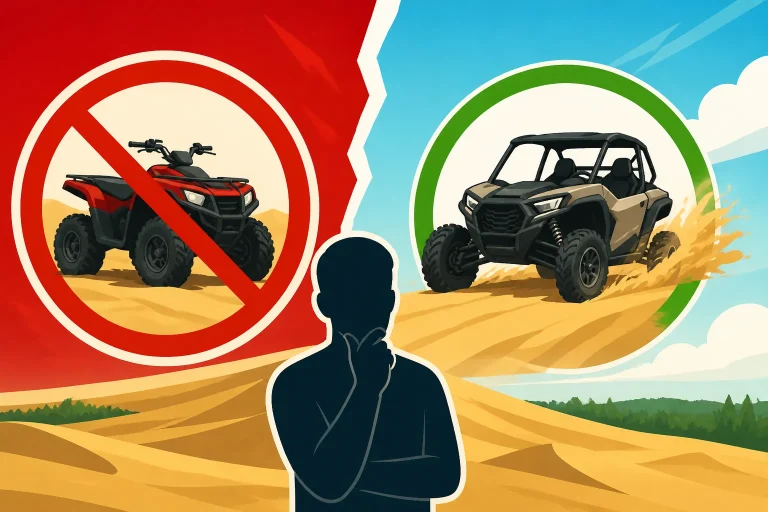
A municipal ATV plate in Saskatchewan is not a province-wide registration, and the word “ATV” may not mean the same thing in every local bylaw. If you ride a quad, side-by-side, mini-bike or other off-road machine, the key question is whether your municipality’s scheme includes that machine type—and where the plate is valid. Here’s how to check before you buy or ride.
What a Saskatchewan municipal plate does and does not mean
Saskatchewan does not issue a general provincial registration plate for ATVs. Some municipalities have their own plate or permit schemes for riding in places they control. A local plate is therefore permission under a local system, not proof that the province has registered the machine.
That distinction matters because a plate’s coverage depends on the rules of the municipality that issues it. A local scheme may identify the machines it accepts, the places where its permit applies, how long the permit lasts, and any conditions riders must follow. Another municipality may use different definitions or have no scheme at all. The practical answer is not simply “a municipal plate covers an ATV”; it is “this municipality’s plate covers the machine types and use named in its rules.”
For background on what local schemes are, see Saskatchewan Municipal ATV Plates Explained. To find out whether a particular place offers one, Which Municipalities Actually Sell You a Quad Plate is a useful starting point. Confirm details with the municipality itself, especially if you plan to travel beyond the area where you bought the plate.
A municipal plate does not automatically:
- Register the machine with the province.
- Permit riding on every road, trail, park or piece of land.
- Replace a driver’s licence, insurance or other operator requirements.
- Apply to every machine that a seller describes as an ATV.
- Transfer to a new owner or remain valid outside the issuing municipality.
It is also separate from provincial snowmobile registration. Snowmobiles have their own registration requirements, so a municipal ATV permit should not be treated as a substitute. See Saskatchewan Registers Snowmobiles, Not ATVs for that distinction.
| Machine or use | What to check before relying on a municipal plate |
|---|---|
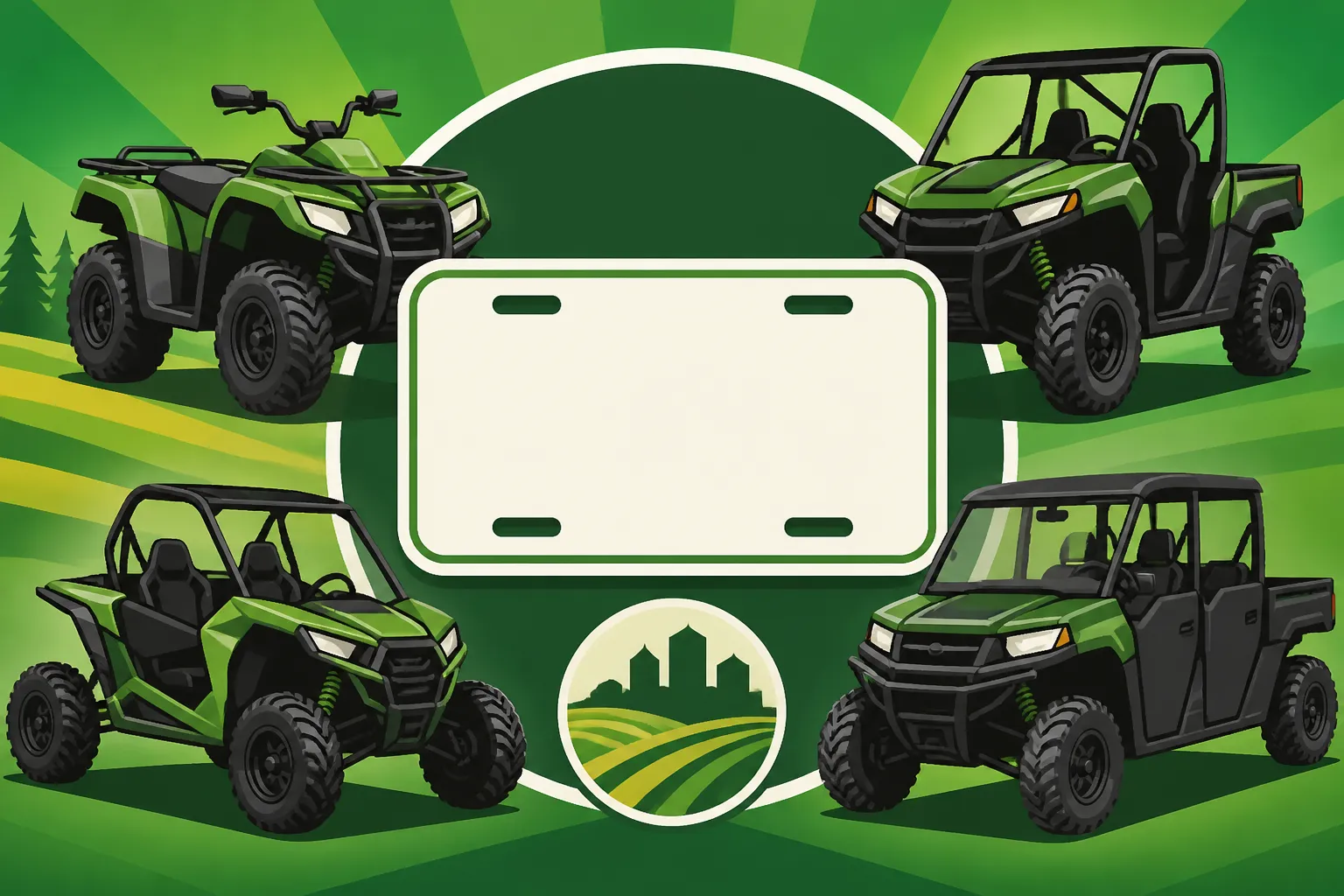
| Conventional quad | Whether the local rules include the machine’s type and intended use |
| Side-by-side or UTV | Whether the bylaw includes side-by-sides or a definition broad enough to cover the vehicle |
| Mini-bike or restricted-use motorcycle | Whether that specific class is included; don’t assume “off-road machine” means eligible |
| Snowmobile | Whether separate provincial registration applies; an ATV permit is not a substitute |
| Trailer | Whether the local scheme says anything about trailers; a plate for a powered machine does not automatically cover one |
| Machine used outside the issuing municipality | Whether the destination recognizes the permit and allows that kind of riding |
How to tell whether your machine is included
Start with the machine’s actual design and classification, not its informal name. A seller, owner or rider may call a machine a “quad,” “UTV,” “side-by-side,” “mini-bike” or simply an “off-road vehicle.” Those labels are helpful in conversation, but they do not settle how a bylaw treats it.
The provincial definitions in Saskatchewan’s All Terrain Vehicles Act are one piece of the picture. A municipality may refer to those definitions, use its own wording, or set conditions that affect which machines qualify for a local plate. Read the local bylaw or permit information rather than relying on a general description of the vehicle. Saskatchewan ATV Definitions Explained covers why legal categories matter, while Saskatchewan Machines the Act Excludes explains that some machines may fall outside the Act’s ATV definition.
Conventional quads
A conventional four-wheel quad is the machine most people have in mind when they hear “ATV.” Even so, check the local scheme’s exact wording. It might refer to ATVs as defined by provincial legislation, use a local definition, or name a group of permitted machine types. The machine’s seat arrangement, controls, weight, intended use or construction may matter under the applicable definition.
If your machine is a typical quad, that makes it a plausible candidate for an ATV permit, not a reason to skip verification. Ask the municipality whether its plate scheme covers your machine’s class and whether it requires you to provide identifying details such as a serial number or proof of ownership.
Side-by-sides and UTVs
Side-by-sides are a common source of uncertainty. A municipality may include them under a broad ATV category, name them separately, or set limits that leave some models outside the scheme. The term “UTV” is widely used in the marketplace, but a manufacturer’s label alone may not establish eligibility under a local bylaw.
If you have a two-seat or four-seat side-by-side, provide the municipality with the make, model and vehicle identification or serial number when asking. If the local staff cannot answer from the model name alone, ask which definition or clause governs. Don’t assume that a plate issued for a smaller quad automatically covers a larger side-by-side.
Mini-bikes and restricted-use motorcycles
Mini-bikes and restricted-use motorcycles may look like off-road recreational machines, but that does not mean a municipal ATV plate covers them. Their legal category can differ from a conventional ATV, and the local scheme may not include them.
This is an important distinction for riders who bought a machine based on a broad description such as “trail bike” or “mini ATV.” Compare the machine’s design with the relevant legal definitions and ask the municipality directly. If the machine is outside the class named in the bylaw, a plate intended for ATVs may not make it eligible.
Snowmobiles, golf carts and other machines
A snowmobile should be treated as its own category, not as an ATV with a different body style. Provincial snowmobile registration is a separate matter. Similarly, golf carts, agricultural equipment and other specialized machines may be treated differently from ATVs under provincial legislation and local rules.
That does not mean every municipality handles every unusual vehicle in the same way. It means you should not assume that an ATV permit covers a machine just because it is motorized and used off-road. If the local bylaw does not clearly name your machine or clearly include its legal class, get an answer before paying for a plate or riding.
The plate’s limits: machine, place and rider
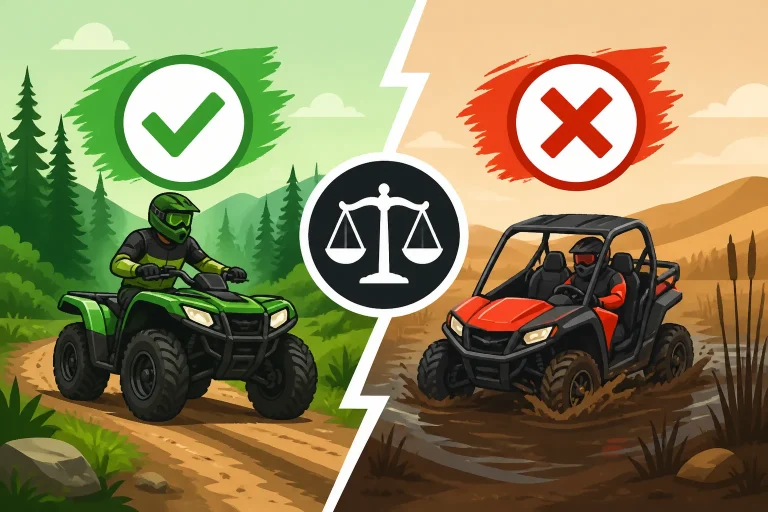
A local plate is only one part of the rules. It is useful to think about three separate questions: Is this machine eligible? Is this place covered? Is this rider allowed to operate it there? A “yes” to the first question does not answer the other two.
The machine
Confirm the class of vehicle the scheme accepts. Ask whether the rules include quads, side-by-sides, mini-bikes or other machines, and whether there are model or equipment limits. If there is any doubt, give the municipality enough information to identify the machine accurately. A photo or the manufacturer’s model details may help, but the answer should still be tied to the bylaw or permit terms.
The place
Municipal authority and permit validity have boundaries. A plate issued by one town, village or other local authority does not necessarily authorize riding in a neighbouring municipality, on provincial land, in a provincial park or on private property. Where you ride may be governed by a separate local bylaw, landowner permission, park rule or provincial restriction.
Before planning a route, check the rules for every area you will enter. Registering With a Town Rather Than the Province explains the local nature of these schemes, and Saskatchewan Rural Municipality Rules is relevant when your route leaves a town or village for a rural municipality. A plate should not be treated as a general trail pass.
The rider and the trip
A municipal plate does not replace provincial operating rules. Riders may still need to meet requirements for licensing, age, supervision, insurance, helmets and safe operation, depending on the circumstances. Local rules can also restrict particular streets, roads or areas even when the machine has a valid local permit.
Check the rules for the specific ride, not only the paperwork attached to the vehicle. A permit may satisfy one local requirement while leaving other legal requirements unchanged. The broader Saskatchewan ATV Road Rules Explained can help with questions about operating a machine on or near roads.
Visitors should make a separate check before relying on a plate from home. A local permit may not be recognized elsewhere, and rules for out-of-province riders can differ from the local scheme. See Saskatchewan Plate Rules for Visitors for the visitor-specific question.
Check before buying a plate or heading out
A short check with the issuing municipality can prevent a wasted trip or a permit that does not cover your machine. Municipal rules and procedures may change, so use current information from the local authority rather than an old receipt, a neighbour’s recollection or a social media post.
Use this process:
- Identify the machine accurately. Write down the make, model, model year and serial or vehicle identification number. Note whether it is a quad, side-by-side, mini-bike, snowmobile or another type.
- Find the local scheme’s rules. Check the municipality’s current bylaw, permit information or office guidance. Look for the exact vehicle classes named and any definitions used.
- Ask about uncertain categories. If the wording says “ATV” but does not clearly address your UTV or other machine, ask the municipality whether that specific model is eligible. Request the relevant bylaw section if the answer depends on a definition.
- Confirm where the plate applies. Ask which roads, trails or municipal areas are covered and whether the permit is recognized anywhere beyond the issuing municipality.
- Check the conditions. Confirm what documents are required, how the permit must be displayed, how long it is valid, and whether the owner or operator must meet additional conditions.
- Check other rules separately. Verify insurance, operator requirements, road restrictions, land access and any park or trail rules that apply to your planned route.
- Keep the confirmation with your records. Save the bylaw, permit terms, receipt and any written response. This is especially useful when a machine’s classification is not obvious.
When asking, be specific. “Does your plate cover an ATV?” may produce an incomplete answer if staff assume you mean a conventional quad. A better question is: “Does your current permit scheme cover this make and model of side-by-side, and where may it be operated under the scheme?”
Also clarify whether a plate applies to a machine or to its owner. Local schemes can set their own rules for sales, transfers, replacements and renewals. Don’t assume that a permit follows the vehicle when ownership changes; Why a Municipal Plate Cannot Be Transferred addresses that issue. For renewal questions, see Saskatchewan Municipal Plate Renewals.
A seller’s plate is not a substitute for your own eligibility check. If you buy a used machine with a plate already attached, confirm whether it is still valid, whether it is tied to the previous owner, and whether your planned use is permitted. For a private purchase, retain clear ownership paperwork as well as any local permit records.
Common mistakes and practical examples
The most common error is treating the word “ATV” as a universal category. In everyday speech, it may refer to nearly any small off-road machine. In a statute or bylaw, the term may have a narrower meaning. The second common error is treating a plate as permission to ride anywhere. A local plate is not a general access pass.
Consider a few typical situations:
- You have a standard quad and live in the issuing municipality. The quad may fit the scheme’s intended category, but you still need to check the bylaw’s eligibility conditions, permit validity and local riding rules.
- You have a side-by-side and the application says “ATV.” Don’t infer coverage from the broad label. Ask whether the local definition includes your model or whether side-by-sides are listed separately.
- You have a mini-bike and a friend says their quad plate works. A friend’s experience may relate to a different machine or municipality. Verify the classification and the local bylaw before riding.
- You bought a machine in one municipality and want to ride in another. The plate may only satisfy rules in the issuing area. Check the destination’s rules and any restrictions along the route.
- You have a snowmobile and an ATV permit. Treat the snowmobile’s registration requirements separately. An ATV permit does not stand in for provincial snowmobile registration.
- You are buying a used machine with a plate attached. Ask whether the permit can be transferred and whether it remains valid after the sale. The plate’s presence does not itself prove that it covers the new owner or a different machine.
If the municipality cannot confirm the machine’s eligibility, pause before buying the permit or riding in a regulated area. Ask for the applicable rule in writing, or contact the appropriate municipal office for clarification. Keep a copy of the response with your machine records.
The best working rule is simple: a municipal plate covers only the machine class, owner or operator, and area included in that municipality’s current scheme. For quads, side-by-sides and less common off-road machines, verify those details directly instead of relying on the plate’s appearance or the name used in a sales listing.
Frequently Asked Questions
Does a Saskatchewan municipal ATV plate cover every quad?
Not necessarily. A quad may fit the category a scheme is designed for, but the local rules determine which machines qualify and what conditions apply. Confirm the specific machine with the issuing municipality.
Does a municipal plate automatically cover a side-by-side?
No. Some schemes may include side-by-sides, but you should not assume that an ATV plate covers every UTV. Check the bylaw’s wording and ask about the make and model.
Can I use one municipality’s plate everywhere in Saskatchewan?
Do not assume so. Municipal schemes are local, and a plate may not apply outside the issuing authority’s area. Check the rules wherever you plan to ride.
Does an ATV municipal plate replace snowmobile registration?
No. Snowmobiles have separate provincial registration requirements. A local ATV plate should not be used as a substitute.
Does a plate let me ride on any road or trail?
No. A plate does not override road restrictions, land access rules, park regulations or other operator requirements. Check the rules for the particular route and land you intend to use.
Disclaimer
This article is for general informational purposes only and does not constitute professional advice. Laws, prices and regulations vary by location and change over time. Consult a qualified professional for guidance on your specific situation.