How to Buy a Saskatchewan Municipal Plate
A municipal ATV plate can be useful where a Saskatchewan community runs its own permit scheme, but it is not a provincial registration. Before paying, confirm that the municipality issues plates, where its rules apply, and what documents you need. This process helps you avoid buying a local plate that does not cover the places you plan to ride.
What a Saskatchewan municipal plate does
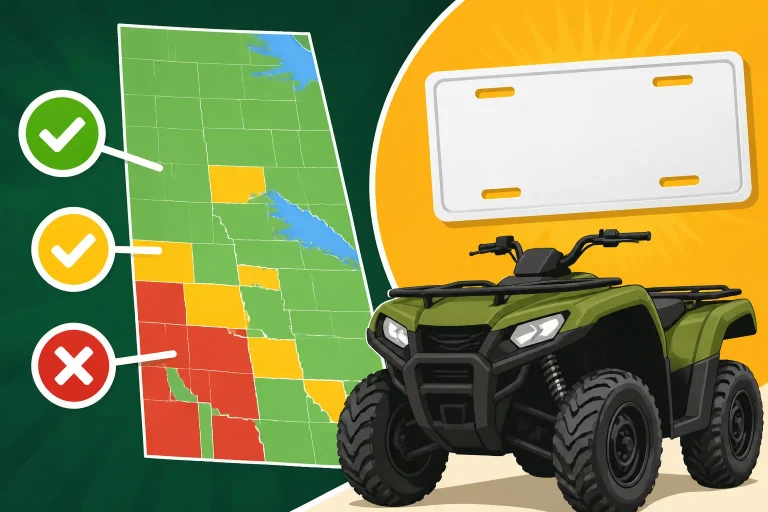
Saskatchewan does not issue a province-wide ATV registration plate. Some municipalities have their own plate or permit schemes, with local rules for riding in the area. A municipal plate is therefore different from provincial vehicle registration: it does not give you blanket permission to ride anywhere in Saskatchewan.
The first question is whether the municipality where you plan to ride has a scheme at all. The answer may depend on the community or rural municipality, and local rules can change. Start by checking directly with the municipal office rather than assuming a nearby town’s plate will work. Which Municipalities Actually Sell You a Quad Plate explains why it matters to confirm the specific municipality.
A local plate may be required for riding in the area, but it does not replace other responsibilities. You still need to follow Saskatchewan’s provincial rules and any relevant local bylaws, land-access restrictions and trail requirements. A plate also does not turn a road or trail into an approved ATV route. For a broader explanation of how local plates fit into the province’s system, see Saskatchewan Municipal ATV Plates Explained.
| Question | What to confirm |
|---|---|
| Does the municipality issue a plate? | Ask the municipal office whether its scheme is active and applies to your intended riding area. |
| Where is the plate valid? | Confirm the roads, trails, land or boundaries covered by the local rules. |
| What do I need to apply? | Ask which ownership, insurance or identification documents are required. |
| How long does it last? | Check the expiry date and renewal process before you pay. |
| Does it transfer with the machine? | Confirm the rule before buying or selling a quad that already has a plate. |
| Can visitors use it? | Ask whether the scheme applies to non-residents and what additional conditions apply. |
Treat the plate as local authorization under local rules, not as a substitute for checking where riding is permitted. A municipal plate may not be recognized by another municipality, and provincial requirements continue to apply whether or not a machine displays one. For how local rules fit into the bigger picture, see Saskatchewan Municipalities With ATV Bylaws and Riding in a Municipality With No Plate Scheme.
Before you go to the municipal office
A short call or email can save a wasted trip. Ask the municipality what its plate covers, how to apply, and whether you need to visit in person. Do not rely on a general description from a seller or another rider: plate schemes and application requirements can differ.
Confirm the scheme and coverage
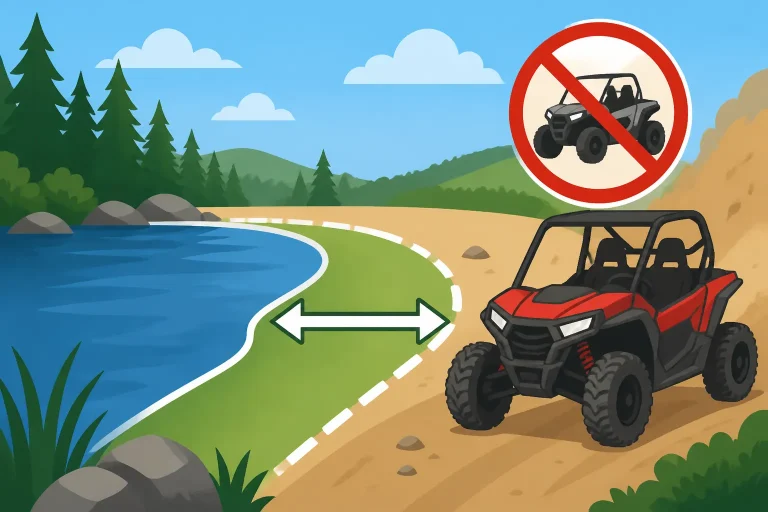
Be specific about where you expect to ride. Ask whether the plate applies throughout the municipality or only in designated places, and whether any roads, beaches, parks or other areas are excluded. If your usual route crosses municipal boundaries, ask each municipality what rules apply there. A plate from one community should not be assumed to authorize riding in another.
Also ask whether the scheme is available to visitors or only to certain applicants. Local eligibility and riding rules may depend on the municipality’s bylaws. A plate is not permission to use private land, Crown land or a trail that is otherwise closed. Check land access separately, and get permission where required.
Ask what to bring
There is no single checklist that applies to every municipal scheme. Before leaving home, ask the office what it requires. It may request information that identifies you and the machine, or documents that show ownership or insurance. If your machine has changed hands and you do not have a conventional registration document, explain that when you call and ask what other evidence the municipality accepts.
A bill of sale can help establish a transaction, but do not assume it will meet every local application requirement. If you are unsure what ownership paperwork to prepare, see Saskatchewan Proof of Ownership on the Trail and What to Bring to Get Your First Quad Plate.
Have the machine’s make, model and serial number available if the office asks for them. Check that the number is legible and matches any paperwork you plan to show. If a seller says a plate is already on the machine, ask the municipality whether it stays with the machine or is issued to the person who applied. Local rules matter here; do not treat a plate as transferable without confirmation.
Check the cost and expiry date
Municipalities set their own charges and payment procedures, so ask the office for the current amount and accepted payment methods. If the permit is valid only for a set period, confirm the expiry date and whether the municipality sends a renewal reminder. Some schemes use a common annual expiry date, while others may have different procedures. Do not budget or plan around a date you have not confirmed.
Check whether the office has seasonal hours or requires an appointment. If you are traveling to a village or rural municipality office, confirming its opening hours before setting out can prevent delays. Planning a Village Office Visit Before You Drive covers practical preparation for that trip.
How to buy the plate
Once you have confirmed that a plate is available and applies to your riding area, follow the municipality’s own application process. The steps below are a useful order of operations, but the office’s current instructions take priority.
- Contact the municipal office. Confirm that it issues ATV plates or permits, whether you are eligible, and where the plate is valid.
- Ask for the document checklist. Find out what proof of ownership, insurance or identification the municipality requires. Ask what it accepts if you bought the machine without a receipt or registration document.
- Verify the machine details. Record the make, model and serial number. Compare the number on the machine with any supporting paperwork before submitting an application.
- Confirm the total charge and payment method. Ask about the current cost, accepted payment options and whether any additional local requirements apply.
- Submit the application as instructed. Some offices may handle applications at the counter; others may direct applicants to a different process. Follow the municipality’s instructions rather than assuming online or walk-in service is available.
- Check the plate or permit before leaving. Make sure it is for the correct machine or applicant, that any identifying details are accurate, and that you understand how it must be displayed.
- Keep the paperwork and note the expiry date. Save your receipt and application documents with the machine’s ownership records. Put the renewal date somewhere you will see it.
If the office cannot issue a plate because it needs more information, ask exactly what is missing and how to provide it. A clear answer is better than making assumptions or presenting incomplete paperwork again. When a dealer is helping with the purchase, ask whether it is handling any municipal paperwork or whether you must apply yourself. A dealer’s involvement does not automatically mean the local office has issued a plate.
Do not use a plate on a different machine unless the municipality says that is allowed. Rules for replacements, ownership changes and transfers can vary. Why a Municipal Plate Cannot Be Transferred and Saskatchewan Municipal Plate Replacements explain why it is worth checking before relying on an existing plate.
After you receive it
Read the instructions that come with the plate or permit. Confirm how it must be displayed, whether you need to carry supporting paperwork, and what to do if it is lost or damaged. Keep proof of purchase, ownership documents and any insurance information together so you can find them when needed.
A municipal plate is only one part of preparing to ride. You remain responsible for provincial requirements, including applicable insurance, equipment and rider rules. Local road bylaws can also limit where and when ATVs may be used. For provincial requirements, see Saskatchewan Insurance Requirements for Riders and Saskatchewan ATV Road Rules Explained.
Before a ride, check that your route stays within the plate’s coverage area and uses places where ATV riding is allowed. If it crosses into another municipality, ask that municipality about its rules rather than assuming your plate carries over. If you are visiting from outside Saskatchewan, confirm visitor requirements separately; having a plate from your home area does not automatically answer what local rules require. Saskatchewan Visitors and Municipal Plates covers that question.
Keep track of renewal instructions and contact the office if you change machines, lose the plate, or sell the ATV. Do not hand the plate to a buyer unless the municipality confirms that it may be transferred. A local plate can make riding in a participating area simpler, but only when it is current, used as directed and paired with permission to ride in the places you choose.
Disclaimer
This article is for general informational purposes only and does not constitute professional advice. Laws, prices and regulations vary by location and change over time. Consult a qualified professional for guidance on your specific situation.