Saskatchewan Safety Course Providers
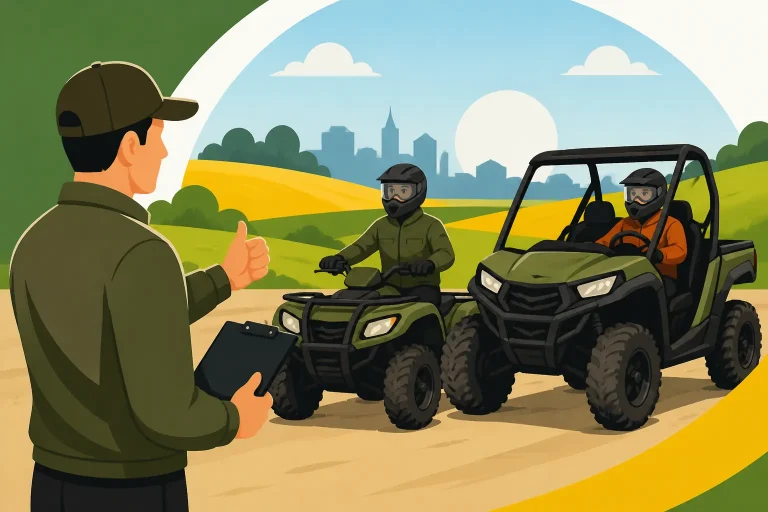
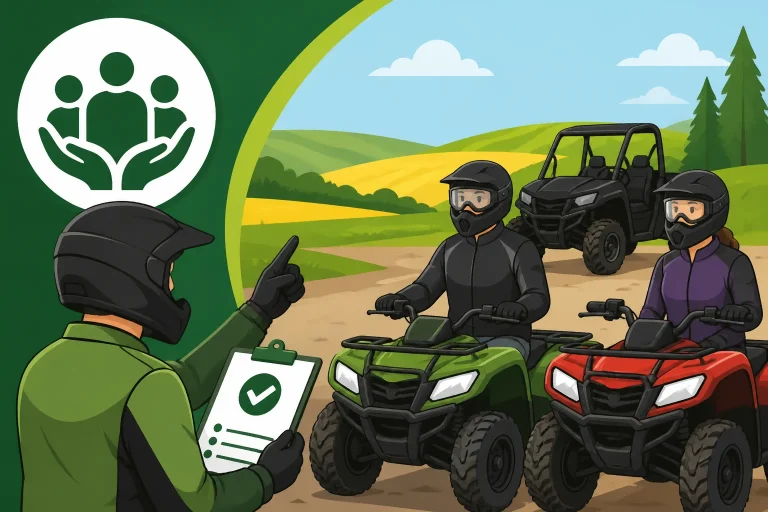
Finding an ATV safety course in Saskatchewan is not just a matter of choosing a nearby class. If a young rider hopes to rely on training instead of riding with an adult supervisor, the course may need to meet specific provincial requirements. Here’s how to identify providers, confirm course approval and choose training that fits the rider and machine.
Saskatchewan ATV safety course providers to check
Two places to start are the Saskatchewan Safety Council and the Saskatchewan All Terrain Vehicle Association (SATVA). Both are associated with ATV rider training in Saskatchewan, but course availability, locations, eligibility and registration details can change. Contact the provider directly before making plans, and confirm that the particular course—not just the organization—is appropriate for the rider’s purpose.
The Saskatchewan Safety Council is one option to ask about, especially if you’re looking for training in or near Regina. Check Courses Run by the Safety Council in Regina for context on those offerings. Ask whether a course is currently scheduled, what equipment the participant needs, and whether the certificate is recognized for the legal situation you have in mind.
SATVA is another organization to contact. Its rider courses may be associated with membership or member activities, so ask about current eligibility, dates and access for non-members. The Rider Courses SATVA Runs for Members can help you understand the type of offering to ask about. Don’t assume that a course listed in an old announcement is still running or that every training session is approved for the same legal purpose.
You may also hear about local instructors in places such as Saskatoon or Unity. A local class can be convenient, but location alone doesn’t establish that a course satisfies a provincial requirement. Ask the instructor for the course’s exact name, the organization delivering it and the basis for its approval. If you can’t find a current local listing, ask a recognized provider or the relevant provincial authority whether an approved instructor serves your area. See Finding an Instructor in Unity or Saskatoon for a starting point.
| Provider or route to check | What to confirm before enrolling |
|---|---|
| Saskatchewan Safety Council | Current course dates, location, age requirements, equipment and certificate details |
| SATVA | Whether the course is currently offered, who can attend and whether membership is required |
| Local instructor | The course’s exact name, provider, approval status and the certificate issued |
| Another training organization | Whether that specific course is recognized for the legal purpose you need |
These are starting points, not a guarantee that every class offered by an organization qualifies as an approved course under Saskatchewan law. The distinction matters most when a young rider plans to use training in place of adult supervision. If the provider cannot clearly explain what the certificate establishes, pause and verify before paying or travelling.
A general riding lesson can still be valuable. It may teach safe operation, controls, terrain awareness and protective equipment. But a course that improves skills is not automatically the same as a course accepted for a particular legal exception. Treat skill-building and legal qualification as separate questions.
When course approval matters under Saskatchewan rules
Saskatchewan’s ATV rules set age and supervision conditions that affect younger riders. In general, a rider must be at least 16 to operate an ATV independently under the age rule. A rider aged 12 to 15 may have a route to riding without a supervisor if the rider completes an approved safety course; otherwise, a qualifying supervisor is required. The details of the rider’s situation still matter, so check Saskatchewan Rules for a 12-Year-Old Rider and Saskatchewan Youth Training Requirements before relying on a certificate.
The key word is “approved.” A course provider may teach responsible riding without its certificate meeting the legal standard for this exception. Before enrolling, ask the provider plainly:
- Is this particular course approved for the Saskatchewan youth-rider requirement?
- Which authority approves or recognizes it?
- What certificate or proof does the participant receive?
- Does the certificate state the course name and completion date?
- Does it apply to the rider’s age and intended type of ATV use?
If you want to understand how training can affect supervision, read How a Safety Course Replaces a Supervisor. Then confirm the current requirement with the provider and the appropriate official source. Don’t rely on a verbal description such as “it’s a safety course” or “it counts for kids” without knowing what the course actually qualifies the rider to do.
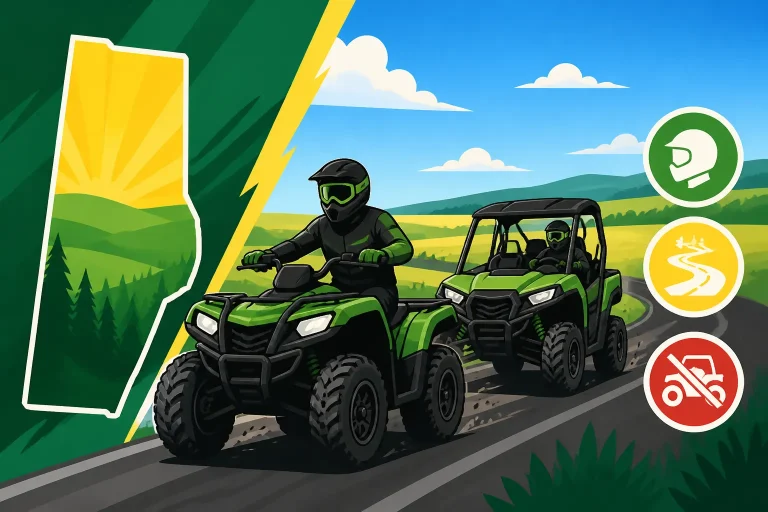
It’s also important not to treat course completion as a general riding pass. Training does not override rules about where a machine may be operated, landowner permission, road access, insurance, helmets or equipment. It doesn’t make a closed area open to riding, and it doesn’t mean a child can ignore supervision in situations where the law or a land manager still requires it.
There is a separate distinction for adult riders. Saskatchewan does not have a universal adult ATV safety-course requirement in the way some people may expect. That doesn’t make training unnecessary, and other rules still apply. For the broader point, see Saskatchewan Has No Adult Safety Course Rule and Do You Need a Licence for an ATV in Saskatchewan?. A course can help an adult build safer habits even when it is not required as a general condition of riding.
Verify the precise course, not just the provider
Approval can attach to a particular curriculum, instructor or course delivery—not to every class an organization might offer. A provider might run introductory workshops, private instruction, youth sessions and other programs. Ask which one is relevant to your need, and get the answer in writing if the certificate will be used to establish eligibility.
The course should be described consistently across the provider’s listing, enrolment information and completion certificate. If the provider’s website uses one name but the certificate will show another, ask how the two relate. If a class has been changed, shortened or moved online, check whether the revised format still meets the requirement you’re relying on.
For an official check, ask the provincial authority responsible for administering the ATV rules which courses or certificates it accepts. Which ATV Training Courses the Administrator Has Approved is a useful topic to review. If a provider names an approval but cannot tell you how to verify it, confirm independently before registering.
How to choose a course that suits the rider
Once you know that a course fits the legal purpose, compare practical details. The most convenient class is not always the best fit if it is designed for a different age group, machine type or experience level.
Start with the rider. Ask about minimum age, whether a parent or guardian must attend, and whether the course is designed for new riders or people who already have operating experience. A younger participant may need a different teaching approach from an adult who wants a refresher. Make sure the provider knows the participant’s age before confirming enrolment.
Then ask what machines are covered. An ATV and a side-by-side are both off-road machines, but the controls, seating, passenger arrangements and operating considerations differ. Don’t assume that training on one automatically covers the other. Tell the provider what the rider will operate and ask whether the class addresses that machine. If you need training for a UTV, get a direct answer rather than relying on the word “ATV” in a listing.
Next, look at the balance between classroom learning and practical instruction. A useful course should make room for core safety topics such as:
- Pre-ride inspection and basic maintenance checks
- Controls, starting, stopping and turning
- Speed, terrain and changing surface conditions
- Braking, climbing and descending safely
- Stability, rollover hazards and avoiding risky manoeuvres
- Passenger limits and riding with others
- Protective clothing, helmets and eye protection
- Emergency planning and what to do after a breakdown or incident
Ask whether participants use their own machines or a provider’s equipment. If riders bring their own, find out whether the machine needs to be in working order, whether it must meet particular requirements and what protective gear is mandatory. Confirm the location and outdoor conditions too. A practical session may require clothing suited to weather, gloves and sturdy footwear, even if the provider supplies some equipment.
Training format and duration vary. Some offerings may be a substantial half-day or full-day commitment; ask the provider for the current schedule rather than assuming a course length based on an old listing. Find out whether there is a test or skills assessment, what counts as successful completion and whether the certificate is issued immediately or later.
Cost, cancellation rules and what is included also vary by provider. For a named organization, check its current information directly rather than relying on an old price or a third-party post. Ask whether the enrolment covers instruction, equipment and any certificate or administrative documentation. If the course is postponed because of weather or low enrolment, understand how rescheduling works.
Booking and documenting course completion
A few questions before registration can prevent a wasted trip or a certificate that doesn’t serve its intended purpose. Use this checklist when you contact a provider:
- Explain the rider’s goal. Say whether you want general skills training or a certificate to meet the youth-rider requirement. Those are not always the same.
- Give the rider’s age and machine type. A provider needs this information to confirm eligibility and course fit.
- Ask about approval. Request the exact course name and ask whether it is recognized for the Saskatchewan rule you are relying on.
- Confirm the practical details. Check the date, location, duration, equipment, clothing and whether the rider must bring a machine.
- Ask what proof is provided. Find out what the certificate states and how to get a replacement if it is lost.
- Keep the records. Save enrolment details, payment confirmation, course information and the completion certificate.
When the rider completes the course, check the certificate before leaving or as soon as it arrives. Make sure the participant’s name is spelled correctly and that the document identifies the course and completion. Keep the original in a safe place and store a digital copy as a backup. A photo or copy may be handy, but don’t assume it will replace the original where an official asks for proof.
If the certificate is unclear, contact the provider while the course details are easy to retrieve. Ask them to confirm in writing what the rider completed and whether the certificate is intended to support the applicable Saskatchewan requirement. A receipt showing that someone paid for training is not necessarily proof of course completion or approval.
Even with the paperwork in order, the rider should know the practical limits of the training. A course does not replace a careful decision about conditions, route, visibility or the rider’s readiness. A newly trained young rider still needs to follow all rules that apply to age, supervision, equipment and the place being ridden. Where land access or local restrictions are involved, check those separately; training does not provide permission to ride someone else’s land or a closed route.
For a family deciding between an approved course and supervised riding, compare what each option actually requires. A supervisor must meet the applicable qualifications and remain responsible for the young rider as required by law. A course may offer the youth an alternate route under the age rule, but only if it is the right approved course and the rider has completed it. The Supervisor Needs a Licence Held 365 Days can help clarify the supervision side of that choice.
The safest approach is straightforward: identify the legal purpose, contact a recognized provider, verify approval for the specific course, and retain clear proof of completion. That takes a little checking up front, but it avoids confusing a useful riding lesson with a certificate that carries a particular legal effect.
Disclaimer
This article is for general informational purposes only and does not constitute professional advice. Laws, prices and regulations vary by location and change over time. Consult a qualified professional for guidance on your specific situation.