Rules That Differ Between Two Parks
A permit that works for one Saskatchewan park may not tell you where you can ride at another. Moose Mountain and Great Blue Heron both offer designated ATV trails, but they differ in trail networks and may differ in access details and permit procedures. Compare the parks before you load the machine, then confirm current requirements with the park office you plan to visit.
The Same Province Does Not Mean the Same Park Rules
Saskatchewan’s provincial rules set a baseline, but they do not make every park an interchangeable riding area. A park can limit machines to designated trails, restrict access to particular roads or areas, and set local procedures for permits and acknowledgement forms. Conditions can also change with trail work, weather, wildfire risk or other closures.
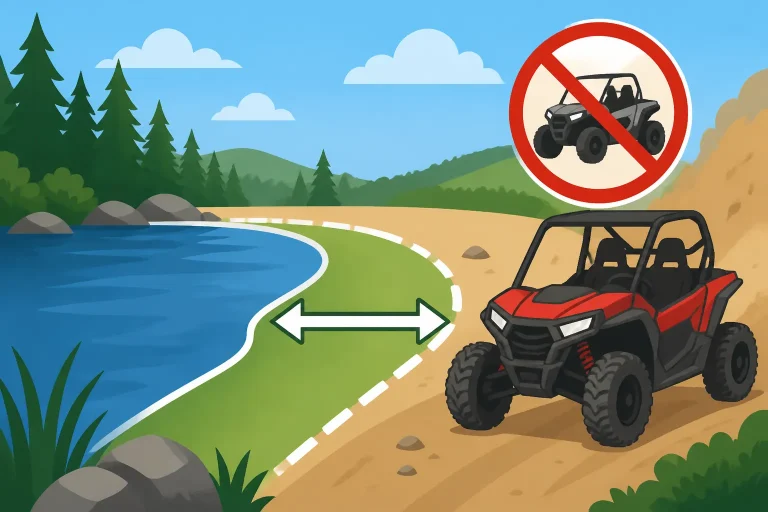
That distinction matters because permission to ride in a park is not permission to ride anywhere within its boundaries. A route that appears on a map, or that you used on an earlier visit, may not be open to machines on the day you return. Follow current signs and posted directions, and ask the park office if the information is unclear.
Saskatchewan parks with machine access generally require riders to stay on designated routes rather than treating the park as open terrain. The starting point is Saskatchewan Parks With Designated Trails Only. From there, look up the specific park’s trail information and confirm what is open before travelling.
A permit or acknowledgement connected to one park should not be treated as a province-wide pass. It may document that you completed that park’s process or accepted its conditions, but it does not automatically authorize riding at another location. Even when two parks have similar procedures, check whether you must complete separate steps or display separate paperwork.
The province-wide rules still matter. Park-specific permission does not replace the general requirements for riders, machines, insurance, safety equipment or lawful operation. Some park guidance also addresses supervision for younger riders and the production of liability insurance when requested. Review Saskatchewan Park Regulations for Machines and Saskatchewan Insurance Proof at a Park Office rather than assuming a local permit covers every obligation.
A useful way to think about it is:
| What you need to check | Why it may differ between parks |
|---|---|
| Which trails are open to ATVs or UTVs | Each park has its own designated trail network |
| Permit or acknowledgement steps | The office, timing and required paperwork may not be identical |
| Route length and layout | A short network offers different trip options from a longer one |
| Seasonal or temporary closures | Conditions and restrictions can change after your last visit |
| Local signs and directions | Posted instructions apply at the location, even if another park’s rules differ |
Before you leave home, check the park’s current information rather than relying on a friend’s experience at another park. That small step can prevent a wasted trip and helps keep riding on routes where it is allowed.
Moose Mountain and Great Blue Heron Are Different Riding Areas
Moose Mountain and Great Blue Heron are useful parks to compare because both are known for ATV trail opportunities, but their networks are not the same size. Moose Mountain’s designated ATV trail system is listed at 47 kilometres, while Great Blue Heron’s is listed at 10 kilometres. Those figures give you a rough sense of scale; they are not a promise that every kilometre will be open during your visit.
For a longer ride, Moose Mountain may offer more distance to work with, but total trail mileage alone does not tell you the route’s condition, difficulty, connections or current access. Read Moose Mountain Provincial Park ATV Trails and check the latest information before planning a full day around a particular loop. A route may be affected by closures or other park conditions.
Great Blue Heron has a smaller listed network. That can suit a shorter outing or a visit where riding is only one part of the day, but it also means you should be realistic about how much riding the park offers. Check Great Blue Heron Provincial Park ATV Trails for the park-specific details instead of assuming it has the same choice of routes as Moose Mountain.
| Planning detail | Moose Mountain | Great Blue Heron |
|---|---|---|
| Listed ATV trail distance | 47 kilometres | 10 kilometres |
| What the distance helps you judge | Potential room for a longer ride, subject to open routes | A more compact network and a shorter riding plan |
| What it does not confirm | Current trail access, conditions or permitted routes | Current trail access, conditions or permitted routes |
| Best next step | Confirm open trails and local requirements with the park | Confirm open trails and local requirements with the park |
A smaller network is not necessarily a drawback. It simply calls for a different plan: check how long the ride is likely to take, whether the designated trails fit your machine and group, and whether the park offers enough riding for the trip you have in mind. At either park, do not extend a ride onto an unmarked route just because the designated system feels short.
The route information should also shape practical decisions. A group with limited daylight, new riders or children may want to choose a conservative itinerary and avoid assuming that the listed distance can be completed at a particular speed. Stops, trail conditions and rider experience all affect the time needed. If a park map is unclear about whether a route is open to your machine, ask the park rather than guessing.
Permits and Paperwork Need a Park-by-Park Check
Do not assume that the permit process is identical at Moose Mountain and Great Blue Heron. Even where parks offer free permits, the steps to obtain one, the office or location involved, and any required acknowledgement may vary. Confirm the process with the park you are visiting and ask whether you need to complete anything before arriving at the trailhead.
A good starting point is How to Get a Saskatchewan Park Trail Permit. Then check the location-specific instructions in Saskatchewan Permit Rules at Moose Mountain or Saskatchewan Permit Rules at Great Blue Heron. These details are more useful than relying on a general statement that parks use permits, because they help you identify the steps that apply to your destination.
Some park procedures may involve an information session or a use acknowledgement form. If one is required, allow time to complete it and keep a record of what the park tells you. Do not assume that completing an acknowledgement at one park satisfies the process at another. See Saskatchewan Park Use Acknowledgement Forms for the role these forms can play, then verify the exact requirement with the park office.
Before heading out, use this simple process:
- Choose the park and check its current ATV or UTV trail information.
- Confirm which trails are open to your type of machine and whether any temporary closures apply.
- Ask the park office how to obtain the required permit and whether an information session or acknowledgement form is needed.
- Check what must be displayed or carried, and whether proof of insurance may be requested.
- Read the signs at the entrance and along the route, and follow any updated directions.
Carry the paperwork the park asks you to have available, even if the permit process was completed online or at an office. If an officer or park employee asks to see proof, being prepared makes the conversation simpler. Keep your proof of insurance accessible as well, and make sure the policy actually covers the machine and the kind of riding you plan to do.
Permits are only one part of the requirements. A park permit does not make a closed trail open, authorize riding beyond designated routes, or replace applicable rider and equipment rules. The same caution applies to municipal plates and permits: a local scheme should not be mistaken for permission to ride in a provincial park. Confirm the park’s requirements directly if any paperwork or permission is unclear.
Plan for Conditions, Closures and the Ride Home
A trail system’s listed distance can remain useful for planning while still being a poor substitute for current conditions. Rain, soft ground, maintenance, wildfire restrictions and other closures can change where you can ride. Check for updates close to your departure, especially if the trip involves a long drive or an overnight stay. Saskatchewan Trail Conditions Before You Haul offers a broader checklist for checking conditions before towing a machine.
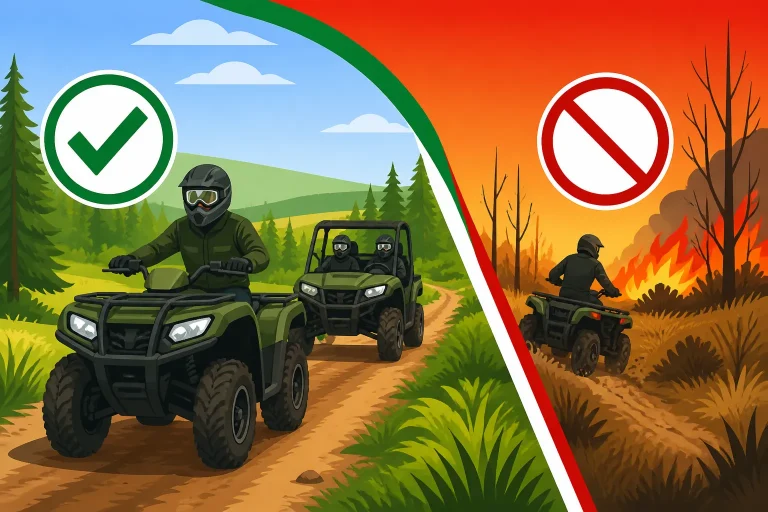
Fire-related restrictions deserve particular attention during the riding season. A fire ban or access order can affect an area even when trails were open on a previous visit. Check the current notices for the park and surrounding area, and do not rely on an old map or a past trip as proof that access remains available. The general background in Saskatchewan Wildfire Season Rules for Riders can help you understand why conditions may change.
Prepare the machine for the park’s requirements as well as the ride itself. Some parks require machines to be washed before entering or using trails to reduce the spread of invasive species. Confirm whether that applies at your destination, and plan where to wash the machine if needed. See Saskatchewan Machines Washed Before a Park Ride for why this step may matter.
At the trailhead, take a few minutes to check signs and review the route with everyone in the group. Make sure each rider knows which trails are designated, where the group will stop and what to do if someone becomes separated. If a route is blocked or a sign conflicts with what you expected, stop and ask park staff rather than riding around the restriction.
The practical difference between two parks is not just a number on a trail map. One may offer more distance; the other may have a smaller network. Each may require its own permit steps, and either can have temporary restrictions that change the plan. Verify the details for the park you are actually visiting, follow the local signs and treat the park’s current instructions as more important than assumptions based on another location.
Disclaimer
This article is for general informational purposes only and does not constitute professional advice. Laws, prices and regulations vary by location and change over time. Consult a qualified professional for guidance on your specific situation.