Saskatchewan Event Permits for a Ride
Planning a group ATV or UTV ride in Saskatchewan takes more than choosing a trail and setting a date. Land access, event approval, insurance, local bylaws and fire restrictions can all affect whether the ride can go ahead. The key is to treat permission to host an event as separate from permission for each rider to operate a machine, then confirm the requirements for every part of your route.
When an organized ride may need a permit
There is no single Saskatchewan permit that automatically authorizes an ATV or UTV event everywhere in the province. Requirements depend on where the ride takes place, who manages the land and what the event involves. A small private outing on land where you have permission is different from a large public ride, an event using park trails or a commercially guided tour.
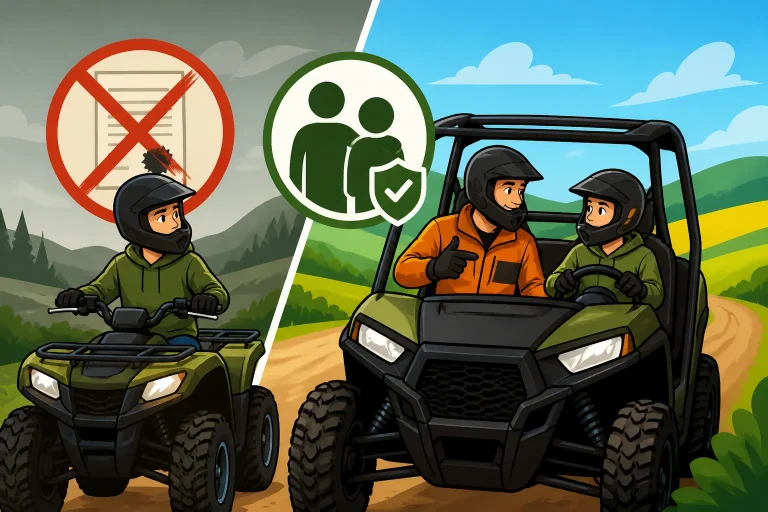
An event permit, when required, generally concerns the organizer’s planned activity and its effect on a particular area. It does not replace riders’ individual obligations. Participants still need to follow applicable rules for age, licensing, helmets, insurance, equipment and machine operation. A permit also does not automatically give the group permission to cross private property, use a municipal road or enter a closed area.
Consider checking with the relevant land manager before advertising the event or collecting registrations if you plan to:
- Invite the public or a large group.
- Use managed trails, public land or a provincial park.
- Set up a start or finish area, signs, food service, temporary facilities or checkpoints.
- Charge an entry fee, provide commercial guiding or promote the ride as a business activity.
- Close, cross or travel along roads that have special restrictions.
- Use land subject to a grazing lease, occupancy agreement or other access arrangement.
- Operate during a period when fire restrictions or other closures may apply.
A club ride is not automatically exempt just because it is organized by volunteers or does not make a profit. Conversely, a private gathering does not necessarily require a formal event permit simply because several machines are travelling together. The land manager can tell you which category applies and what information is needed.
It also helps to distinguish among three kinds of permission:
- Land access: Are the machines allowed on the land and route?
- Event approval: Does the organizer need authorization to hold an organized activity there?
- Participant compliance: Can each rider legally operate their machine under the rules that apply to that location?
A municipal plate scheme, where one exists, addresses local requirements only. It does not give an event organizer blanket access to trails or land. For background, see Saskatchewan Municipalities With ATV Bylaws and Saskatchewan Municipal ATV Plates Explained.
Requirements depend on the land and route
A ride that crosses several land types may need several separate permissions. Plan the route as a series of segments, not as one continuous trail with one approval.
| Route or activity | What to confirm before the event |
|---|---|
| Provincial Crown land | Whether the route is open to the machines, whether organized-event approval is needed, and whether closures or local conditions apply |
| Provincial park | Whether machines are permitted on the proposed trail and what event, permit, acknowledgement or insurance conditions apply |
| Municipal roads or land | Whether local bylaws allow the proposed riding and whether the municipality requires event coordination or approval |
| Private land | Clear permission from the landowner for the route, event dates and any facilities or signs |
| Grazing lease land | Whether access is allowed and whether the leaseholder’s permission is needed |
| Commercially guided ride | Whether commercial guiding or business-related approvals apply in addition to land access |
Crown land
Crown land is not one uniform riding area. Access can depend on the land’s status, posted restrictions, an administrator’s order, a permit or agreement, and conditions such as fire closures. A route being visible on a map does not establish that it is open to a group event.
For a planned event, describe the route, dates, expected number of machines and any planned facilities when you contact the appropriate land manager. Ask whether the area is open to ATV or UTV use, whether organized-event approval is needed and whether the organizer must provide insurance or other documents. The general rules for access are covered in Saskatchewan Crown Land Access Rules and Saskatchewan Crown Land Riding Permission.
If any section crosses occupied Crown land, a lease or land managed under an agreement, ask specifically who can authorize access. Permission from a person who uses or occupies an area may not replace approval from the responsible land manager, and approval from a land manager may not replace a leaseholder’s consent. See Saskatchewan Crown Land Occupant Permission and Saskatchewan Grazing Lease Access Rules.
Provincial parks
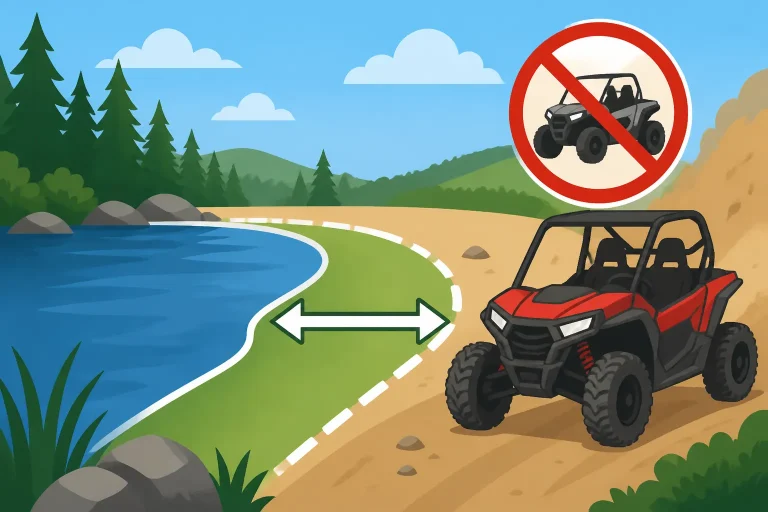
Parks can have designated routes, restricted areas and conditions that differ from those on other public land. Do not assume that a trail shown on a map is open to ATVs or UTVs, or that ordinary individual trail access automatically covers an organized event. Confirm the current rules with the park office or other responsible contact.
Ask whether the planned activity requires an event approval, a trail permit, an acknowledgement form, proof of liability insurance or limits on group size and staging. Check whether the route includes roads or other areas closed to machines. The broader rules are explained in Saskatchewan Park Regulations for Machines, and Saskatchewan Event Permits for a Ride may help you prepare questions for the responsible office.
Municipal and private land
Municipal bylaws can determine whether ATV or UTV use is allowed on specific roads, trails or public areas. Rules may differ from one community to another, and an event route may pass through a municipality with different restrictions from the area where the ride begins. Contact each relevant municipality rather than relying on a neighbouring town’s rules.
For private land, get the landowner’s consent before announcing a route. Be specific about where and when the group will ride, how many machines are expected and whether the event will involve parking, signage, food or temporary facilities. If the route crosses several properties, permission from one owner does not cover the rest. For grazing leases, check the separate access considerations in Saskatchewan Grazing Lease Access Rules.
How to prepare an event-permit request
A complete, clear request makes it easier for the land manager to assess the ride and identify any conditions. Start well before the event date: offices may need time to review the route, consult other parties or ask for missing information. No single lead time applies everywhere, so ask the responsible office when it needs your materials.
Use this process:
- Map the full route. Mark the start and finish, trail sections, crossings, staging areas, checkpoints and any planned support locations. Identify the land type or manager for each segment as best you can.
- Describe the event. Include the proposed date or date range, expected number of riders, number of machines, public or club status, and whether there is a fee or a commercial component.
- List what you will set up. Mention signs, flags, tents, food service, generators, temporary facilities, parking areas, cleanup plans and any other activity beyond riding.
- Contact the relevant land managers. Explain that the ride is organized and ask directly whether an event permit or other written approval is required. If the route crosses multiple jurisdictions, contact each one.
- Ask about required documents and conditions. These may include an application, route map, insurance evidence, landowner consent, safety plan, participant information or restrictions on timing and group size. Requirements vary, so do not assume a document accepted in one area will meet another area’s rules.
- Get approvals in writing. Keep the permit, permission, maps and any conditions together. Share relevant details with ride leaders and make sure the event stays within the approved route and dates.
- Reconfirm close to the ride. Check for changes to closures, fire restrictions, trail conditions or local rules. If the route or event plan changes, ask whether the approval must be amended.
When contacting an office, keep the first inquiry concise but useful. For example: “We are planning a non-commercial ATV ride on these dates, with about this many machines, using the attached route map. Does this activity require event approval, and what documents or conditions should we plan for?” If the ride is commercial, say so clearly rather than describing it as a recreational club event.
The organizer should also ask who has authority to approve each part of the route. A local office may be able to answer general questions but may not manage every trail or parcel. When the answer is unclear, ask for the correct contact rather than treating silence or an informal conversation as approval.
Insurance, fire restrictions and event-day responsibilities
An event permit is not a substitute for insurance. Ask the land manager what proof it expects from the organizer, and verify separately what coverage participants need. A liability policy for the event may address risks connected with organizing the group, while each rider’s own policy may address the machine and the rider’s liability. These are not necessarily interchangeable. See Saskatchewan Insurance Requirements for Riders and Saskatchewan Insurance Proof on the Trail.
Be equally careful about fire-season conditions. Restrictions can change during the season and may affect access to land or the use of machinery. Check current notices for the specific area shortly before the ride, and ask whether any restrictions apply to the event route or planned equipment. Organizers should communicate closures promptly and have a practical way to cancel or reroute if conditions change. See Saskatchewan Wildfire Season Rules for Riders.
On event day, designate a lead contact who has the approvals, route map and relevant phone numbers. Brief participants on the approved route, speed and safety expectations, how to handle a closure or emergency, and the requirement to stay together where appropriate. Keep the group within the approved area; do not treat a permit as permission to explore adjacent trails or land.
Use a simple final check before departure:
- Are written approvals and landowner permissions on hand?
- Does the route still match what was approved?
- Have closures, fire restrictions and trail conditions been checked?
- Do riders understand the local rules and their individual responsibilities?
- Is the event contact able to reach ride leaders during the day?
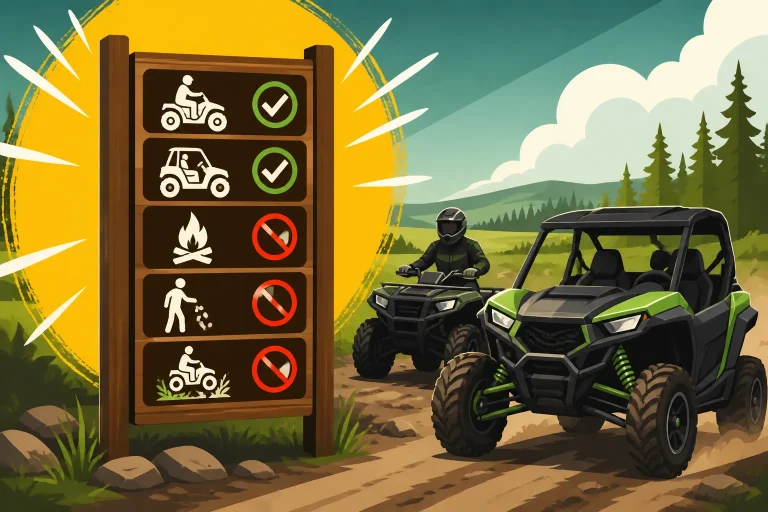
- Is there a plan for emergencies, breakdowns, litter and leaving the area as found?
A permit request is only part of organizing responsibly. If a trail is closed, a landowner withdraws permission or conditions change, the safest option may be to adjust the route or postpone. Check Saskatchewan Trail Conditions Before You Haul before the group travels to the staging area.
Disclaimer
This article is for general informational purposes only and does not constitute professional advice. Laws, prices and regulations vary by location and change over time. Consult a qualified professional for guidance on your specific situation.