Saskatchewan Hunting Access by Machine
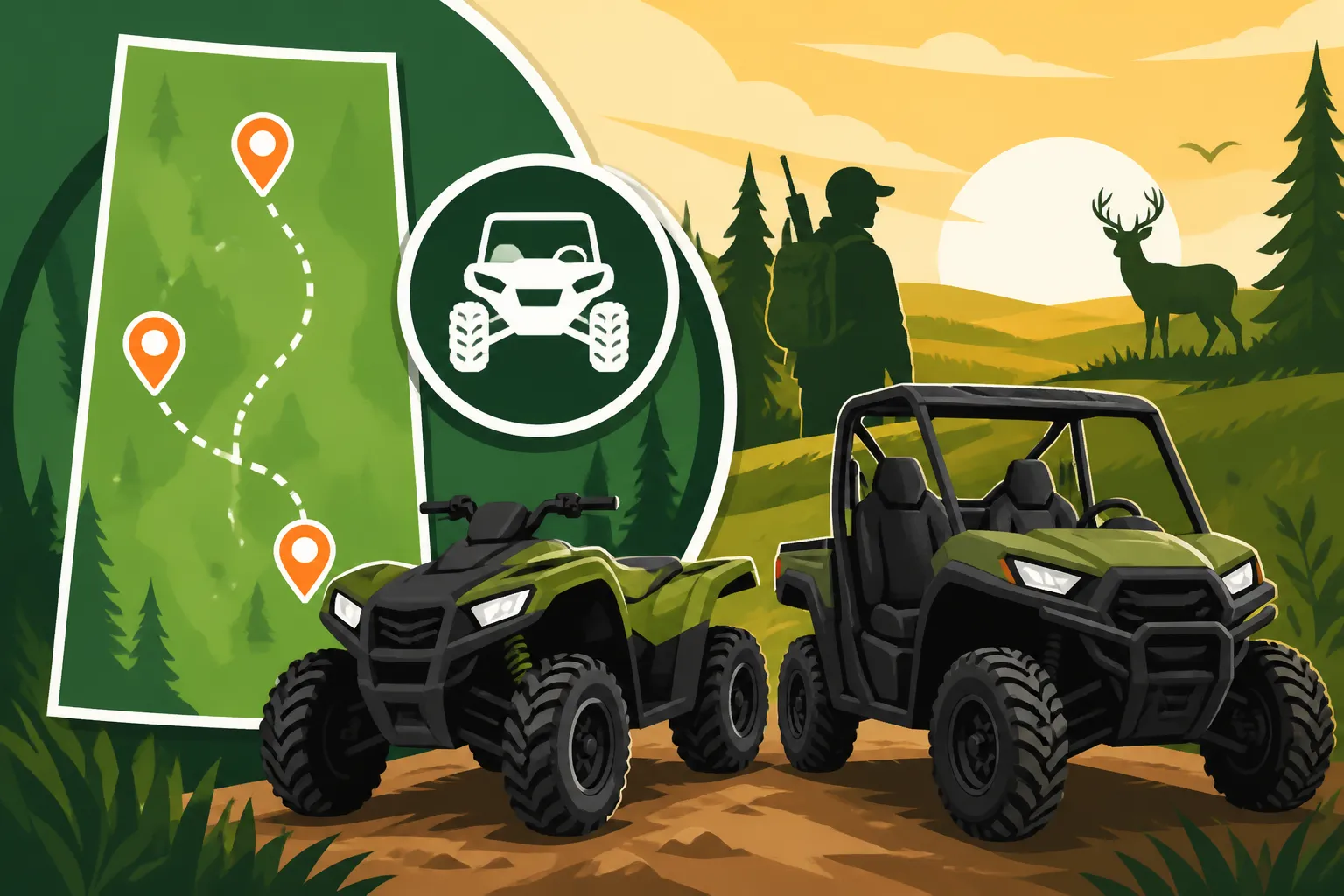
Hunting access by ATV or UTV in Saskatchewan involves more than having a valid hunting licence. Land status, permission to travel, local riding rules and hunting regulations all matter. Separate those questions before you unload: this helps you avoid trespass, a closed route or a machine-use rule that conflicts with your hunt.
A hunting licence does not grant machine access
A hunting licence authorizes the activity described by its terms; it does not automatically give you permission to cross land by ATV or UTV. The reverse is also true: permission to ride across a property does not necessarily authorize you to hunt there.
Before a trip, check both sides of the plan:
- Where will you hunt? Confirm the land’s status and whether hunting is allowed there under the current rules for your species, season and licence.
- How will you reach it? Confirm that the specific route is open to your type of machine and that you have permission where required.
- What will you do once there? Check whether machine use is restricted for hunting, transporting equipment, following game or retrieving an animal.
These checks matter because land access can change over a short distance. A route may pass from private land to Crown land, onto an occupied lease, across a municipal road or into a protected area. A trail that is open for one purpose or season may be closed for another.
Check land status before you ride
Start by identifying the parcel and route on a current map, then confirm the information with the landholder or relevant land manager. A map can help you plan, but it does not replace permission or a current closure notice.
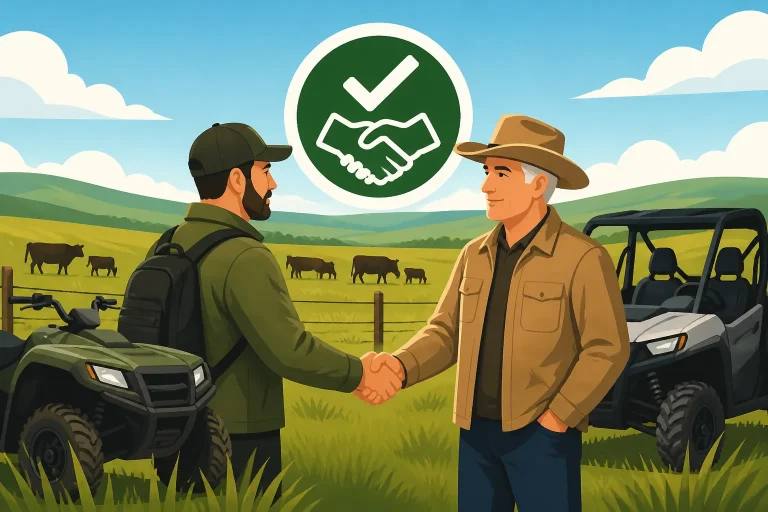
On private land, get permission from the landowner before entering. Ask whether the permission covers the route, the date, your machine and the activity you have in mind. Permission to hunt on foot may not include permission to drive across the property, park at a field edge or retrieve game by machine. For more on the distinction, see Saskatchewan Private Land Permission.
Crown land also needs a closer look than “public land” might suggest. Some areas have occupants, leaseholders, access conditions, seasonal restrictions or other management rules. Check whether the land is occupied and who has authority to grant the access you need. Saskatchewan Crown Land Riding Explained and Saskatchewan Crown Land Occupant Permission cover those access questions in more detail.
Grazing leases are a particularly important case. A lease is not a blanket invitation to drive around because it appears on a public map. Contact the leaseholder, get clear permission for your proposed route and respect gates, livestock and any conditions they set. See Saskatchewan Grazing Lease Access Rules before planning a ride through leased land.
Posted signs, gates and barriers are practical warnings, not details to sort out after unloading. If a route is marked closed or permission is unclear, stop and verify rather than assuming that a hunting plan gives you an exception. Reading Posted Land Signs Before You Unload explains what to check at the access point.
Keep hunting access and ATV rules separate
Even with permission to hunt and travel, the machine still has to be used lawfully. Rules can differ depending on whether you are on a highway, a grid road, private land, Crown land, a designated trail or land managed under a special restriction. Local bylaws and posted prohibitions may also affect where you can ride.
Do not assume that a route used by trucks or farm equipment is open to ATVs and UTVs. A road’s status, municipal rules and signs can all affect machine access. If your route uses a grid road, check Saskatchewan Rules for Riding a Grid Road and confirm whether the relevant municipality has additional rules.
A route that is legal for travel may still be unsuitable for hunting activity. Hunting regulations can govern the use of vehicles in connection with hunting, and the details may depend on the activity and situation. Check the current rules before using a machine to approach wildlife, pursue game, transport a firearm or retrieve an animal. Do not rely on a general assumption that “riding is allowed” means every hunting-related use is allowed.
| Situation | What to confirm before the trip |
|---|---|
| Private land | Landowner permission for both hunting and machine travel, including the route and any conditions |
| Crown land | Land status, occupant or leaseholder rights, closures and any access conditions |
| Grazing lease | Permission from the leaseholder, gates, livestock and route limits |
| Grid road or municipal area | Road access, local bylaws, signs and any municipal plate or permit rules |
| Park or designated riding area | Whether hunting is permitted there and whether machines may use the route |
| Game retrieval | Hunting rules for retrieval, land access along the route and any machine-use restrictions |
For a broader look at the land-access side of hunting, see Saskatchewan Hunting Access by Machine and Saskatchewan Crown Land Riding Explained. For the distinct question of bringing a machine to retrieve harvested game, see Saskatchewan Game Retrieval by Machine. Treat retrieval as its own decision, not as an automatic extension of permission to hunt.
Plan a route that is lawful and workable
A good access plan is more than a line on a map. It should show where the machine can travel, where it must stop and how you will reach the hunting area without crossing land or routes you have not checked.
Confirm each part of the route
Trace the route from the unloading point to the intended parking or staging area. Mark property boundaries, roads, trail junctions, gates, water crossings and any points where land status changes. If you need to cross a private parcel or occupied lease, contact the appropriate person before the trip.
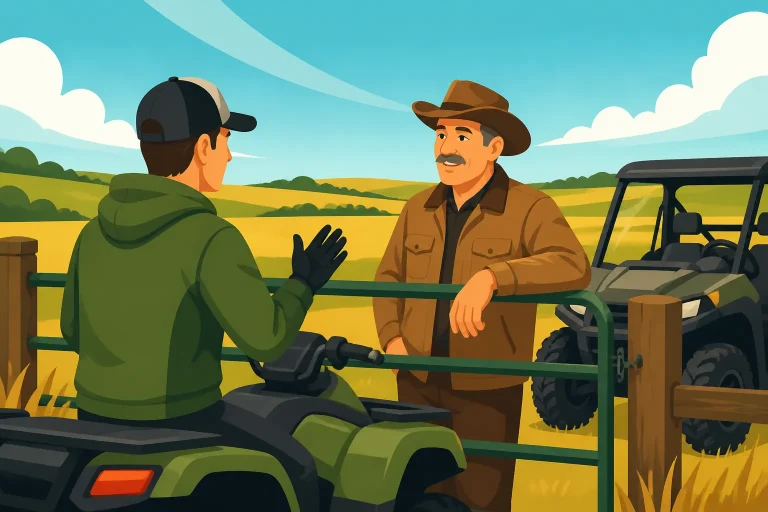
Ask permission questions plainly. For example:
- May I ride this specific route on this date?
- Where may I park or leave the machine?
- Are there gates, livestock or areas I must avoid?
- Does permission cover retrieving an animal by machine?
- Are there restrictions on passengers, trailers or the number of machines?
A clear answer can prevent a misunderstanding at the property line. If the permission is conditional, make sure everyone in your group understands the conditions. Keep a written message or other record where practical, but remember that a record of permission does not override a closure or a rule that applies to the land.
For Crown land, verify current conditions rather than relying on an old route description or another hunter’s past experience. Land access, fire restrictions and local closures can change. If a route is on a designated trail, check that the trail is open to your machine and open for the intended use. A hunting route is not automatically a designated ATV trail.
Consider roads, crossings and local rules
If your route includes a public road or ditch, check the applicable riding rules before you leave. The fact that a road provides the shortest route does not mean an ATV or UTV can use it in the same way as a highway vehicle. Municipal bylaws may allow or prohibit riding in particular places, and posted restrictions may apply.
Plan crossings in advance. Use a lawful crossing point, keep the route as direct as required by the rules and avoid travelling along a road or highway where that is prohibited. If a bridge, culvert or other crossing is involved, check whether machines may use it and whether the land manager has added restrictions.
Think about the practical side, too. A route that is technically accessible may be unsafe or damaging when wet, soft or close to livestock. Mud, muskeg, steep banks and narrow trails can turn a short trip into a recovery problem. Avoid making a new route through crops, pasture or sensitive ground just to reach a hunting spot. If the route is deteriorating or conditions are unsafe, turn back and use a lawful alternative.
Make space for fire and seasonal restrictions
Hunting often involves travel during dry or windy conditions, when wildfire restrictions may affect access. Check for fire bans, area closures and restrictions on Crown land before driving in, then check again if conditions change during the trip. Some restrictions can apply to machine use even when the hunting season remains open.
Your machine can also carry combustible material such as dry grass, crop residue or debris near hot components. Inspect it during the day, especially after travelling through long grass or brush, and follow current wildfire requirements. See Saskatchewan Fire Season Riding Restrictions for more about checking closures and riding during fire season.
If a closure takes effect, do not treat a hunting licence, land permission or previously open trail as an exemption. Follow the current direction for the area. A route that is closed should not be used simply because it is the only convenient way to reach a hunting location.
Prepare your machine and paperwork
Paperwork for hunting and paperwork for machine use are different. Carry the documents that apply to the hunt, and be ready to show proof of insurance or other information required for the machine and location. A municipal plate or local permit, where one applies, does not replace hunting authorization or permission to cross land. Saskatchewan does not have a province-wide ATV registration system; local rules can still matter. See Saskatchewan Does Not Register ATVs for the registration distinction.
Check your insurance before the trip. Confirm that the policy covers the machine’s intended use and that the coverage is appropriate for riding in the areas you plan to visit. Keep proof accessible, rather than buried under hunting gear. Proof of Insurance Is What Saskatchewan Officers Ask For explains why it is useful to carry it.
Do a basic pre-trip inspection, including tires, brakes, lights, fuel, controls and any equipment needed for the route. Bring recovery gear suited to the terrain, a first-aid kit, water and a way to navigate if phone service is unreliable. If you are travelling with a group, agree on where to stop, how to communicate and what to do if someone gets separated or a machine breaks down.
If firearms are part of the trip, check the current hunting and firearm rules for transport and use before loading the machine. Store and handle firearms in accordance with those rules, and do not assume that a scabbard, case or machine design makes a particular practice lawful. The details can depend on the activity and circumstances, so confirm them with current official guidance.
Visitors bringing a machine from outside Saskatchewan should not assume that their home registration, plate or insurance settles every local question. Check the rules that apply to the machine, the route and the hunting activity in Saskatchewan. Saskatchewan Rules for an Out-of-Province Machine is a useful starting point for the machine side.
Use a simple pre-trip check
A short check before loading can catch the problems most likely to disrupt a hunt. Revisit it if you change locations, add a route or decide to retrieve game by machine.
- Confirm the hunt: Check the current season, licence conditions, area rules and any restrictions on vehicle use connected with hunting.
- Confirm the land: Identify private land, Crown land, occupied leases, protected areas and any posted closures.
- Get permission: Ask the landowner or leaseholder about the exact route and the activities permission covers.
- Check the ride: Verify road and trail access, municipal bylaws, signs, fire restrictions and any local permit requirements.
- Plan retrieval separately: Make sure both hunting rules and land access allow the proposed retrieval route.
- Prepare the machine: Check its condition, insurance, required documents, safety gear and recovery equipment.
- Brief the group: Share the route, boundaries, permission conditions and a plan for changing conditions.
If a rule or access answer is uncertain, pause and ask the responsible landholder, municipality or land manager before riding. This is especially important when the route crosses several kinds of land or when the plan includes transporting an animal. A little checking before the hunt is easier than explaining an unauthorized crossing after the fact.
Disclaimer
This article is for general informational purposes only and does not constitute professional advice. Laws, prices and regulations vary by location and change over time. Consult a qualified professional for guidance on your specific situation.