Reading Posted Land Signs Before You Unload
There's nothing quite like the excitement of pulling up to a new spot, whether it's the edge of a vast field, a wooded area near a lake, or a gravel pit, ready to unload your ATV or UTV and hit the trails. But that rush can turn into a real headache – or worse, a hefty fine – if you haven't taken a moment to properly read and understand the signs around you. This guide is all about helping you avoid those uncomfortable, potentially costly situations by showing you how to correctly interpret posted land signs, understand the rules, and ensure your ride starts on the right side of the law and local landowners in Saskatchewan.
The Critical Importance of Reading Posted Land Signs
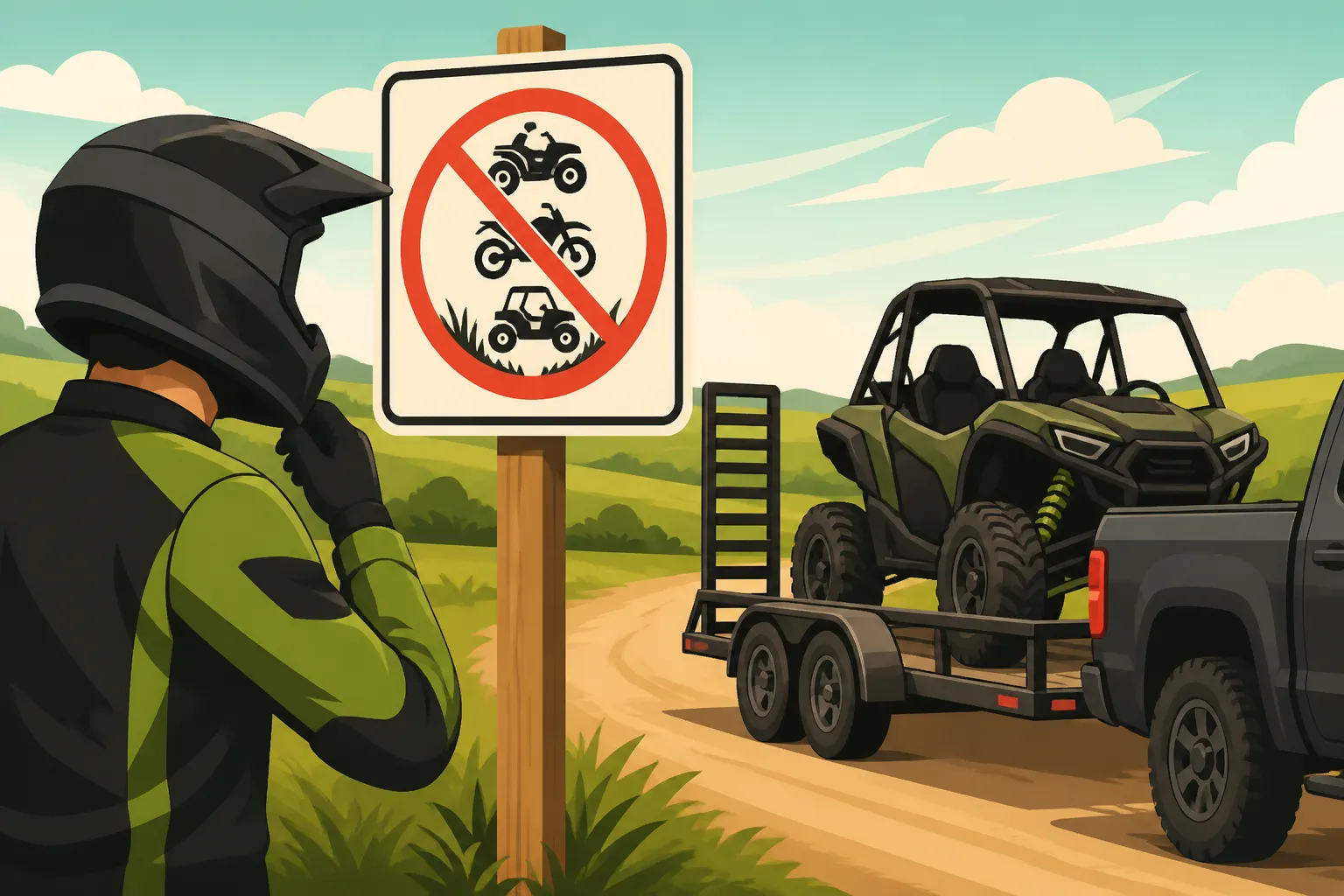
Picture this: you've just trailered your prized machine, maybe a rugged utility quad from SuperATV, for hours to what you thought was a great riding spot. You back the trailer up, drop the tailgate, and just as you're about to fire up the engine, an angry landowner or, even worse, a conservation officer pulls up. It's a scenario far too many riders have faced, and it almost always stems from a misunderstanding of who owns the land you're about to ride on and what rules apply. Taking those few extra minutes to read and understand posted signs isn't just about avoiding a ticket; it's about respecting private property, maintaining good relationships with rural communities, and keeping access open for all responsible riders.
Why It's More Than Just "Getting Caught"
When you ride on posted land without permission, it's easy to think of it as just a minor infraction, a risk you take. But it's so much more than "getting caught." For the landowner, it's an invasion of their privacy and their livelihood. Farms and ranches are their homes and workplaces, and an unexpected ATV driving across their fields can cause damage, disturb livestock, or even create safety hazards for their family and employees. It erodes trust and makes them less likely to ever consider allowing recreational access in the future, not just for you, but for all riders.
Beyond the immediate landowner relationship, riding where you shouldn't can lead to significant legal consequences. We're talking about fines, potential impoundment of your machine, and even civil lawsuits if you cause damage. The Act in Saskatchewan gives peace officers the authority to deal with these situations, and they don't take kindly to blatant disregard for property rights. This isn't just about a simple ticket; it can impact your driving record, your wallet, and your ability to enjoy the sport. Moreover, it paints all ATV and UTV riders with the same brush, making it harder for advocacy groups like SATVA to work with landowners and municipalities to secure more riding opportunities.
The Legal Framework Behind Posted Land
In Saskatchewan, the concept of "posted land" is deeply rooted in trespass laws. Essentially, if land is privately owned and the owner has indicated, through signs or fences, that entry is prohibited or restricted, then entering that land without permission constitutes trespass. The Saskatchewan Trespass to Property Act clearly outlines these protections for landowners. It’s not just about a "No Trespassing" sign; even a well-maintained fence or natural boundaries that clearly define private property imply that entry is not permitted without explicit consent. Ignorance of these boundaries is rarely considered a valid excuse.
This legal framework means that the onus is on the rider to know where they are and whose land they are on. This is particularly crucial in Saskatchewan, where vast tracts of farmland, ranch land, and mixed-use properties create a complex patchwork of ownership. Unlike some areas with clearly designated public trails, much of Saskatchewan's landscape is private, and respecting these boundaries is paramount. While there are some exemptions, such as certain Crown lands or specific municipal agreements, these are the exceptions, not the rule, especially when it comes to actively cultivated or inhabited private property. It’s a serious business, and understanding [Saskatchewan Trespass Law for Riders] is your first line of defense against problems.
Common Misconceptions About Private Land Access
One of the biggest misconceptions riders often have is the idea of "implied permission" or "if there's no gate, it's open." This simply isn't true in Saskatchewan. Just because a field doesn't have a fence across every single access point, or because a dirt track looks inviting, doesn't mean it's public access. Many landowners don't want to fence off every inch of their property, especially if it's agricultural land. Their expectation is that people will respect the basic principle of private property.
Another common myth is that "Crown land is always open." While much of Saskatchewan's Crown land is accessible, it's not a free-for-all. Certain Crown lands can be leased for agricultural, forestry, or recreational purposes, making them effectively private in terms of access. Additionally, there are ecological reserves, parks, and other protected areas on Crown land where ATV and UTV use is heavily restricted or outright prohibited. Always verify the status of Crown land before you ride. [Saskatchewan Crown Land Access Rules] vary, and knowing the specifics can save you a lot of grief. Some riders also believe that if they're "just passing through" or "not causing any harm," it's okay. Again, this ignores the landowner's rights and the legal definition of trespass. If you don't have permission, you're trespassing, regardless of your intentions.
Deciphering What Those Signs Actually Mean
Reading a sign isn't just about recognizing the words "No Trespassing." It's about understanding the specific instructions, identifying the type of land, and knowing who to contact if you have questions. Each sign can provide crucial context about your riding rights and responsibilities.
Understanding Common Signage Language
Signs come in many forms, and while some are straightforward, others might require a bit more thought. Here's a breakdown of what you might encounter:
- "No Trespassing" or "Private Property": These are the clearest indicators. They mean exactly what they say: do not enter. This applies to walking, driving, and especially riding an ATV or UTV. Respect these signs without exception.
- "No Hunting/Fishing/Trapping": While these signs specifically mention hunting, fishing, or trapping, they generally imply "no unauthorized entry" for any recreational purpose. If a landowner doesn't want hunters on their land, they almost certainly don't want ATVs either, due to the potential for damage, disturbance, or perceived nuisance.
- "Keep Out" or "Entry Prohibited": Similar to "No Trespassing," these are direct commands to stay off the property.
- "Posted" or "Permit Required": Sometimes, land might be posted with signs indicating that entry is restricted to those with a valid permit. This is more common on large landholdings, forestry lands, or specific recreational areas. If you see this, you need to seek out information on how to obtain the required permit. Don't assume you can just ride through.
- "Authorized Vehicles Only": This sign typically indicates that only vehicles directly involved in the operation of the property (e.g., farm equipment, ranch vehicles) are allowed. Your recreational ATV, even if it's a utility model from SuperATV, is likely not an "authorized vehicle" in this context unless you have explicit permission.
- Signs with a Name and Phone Number: These are gold! If a sign says "Private Property – [Owner's Name] – [Phone Number]," that's your direct line to asking for permission. This is always the best approach if you're truly interested in riding a specific area. Don't be afraid to make the call; a polite request often goes a long way.
Remember, the absence of a specific "no ATVs" sign doesn't mean ATVs are allowed. If the land is clearly private and posted with any of the above general restriction signs, assume ATVs are included in the prohibition.
What to Do When There's No Sign
This is where things can get tricky. What if you arrive at what looks like a promising area, but there are no signs at all? The general rule of thumb in Saskatchewan should always be: if you don't know for sure, assume it's private and seek permission.
Here’s a table outlining a helpful approach:
| Scenario | Recommended Action |
|---|---|
| Looks like active farmland/ranch land | Do Not Enter. This is almost certainly private. You need to identify the landowner and [Getting Written Permission From a Farm Landowner] is crucial. |
| Looks like undeveloped bush/forest | Identify Land Ownership. Use mapping apps (like iHunter Saskatchewan or others that show land ownership) or consult local rural municipality (RM) offices. If it's private, seek permission. If it's Crown land, check for specific restrictions. |
| Looks like a gravel pit/aggregate site | Do Not Enter. These are almost always private commercial operations and are extremely dangerous for recreational riding due to heavy equipment, unstable ground, and industrial activity. |
| Immediately adjacent to a known public road/trail | Verify Boundaries. Even if it looks like an extension, the land might quickly become private. Be cautious and verify ownership before proceeding. |
| Old, overgrown trail heading into the unknown | Proceed with Caution or Avoid. Unless you can confirm public access, it's best to avoid. Overgrown trails often lead to private land or unmaintained areas. |
It's better to be overly cautious than to accidentally trespass. Knocking on a farmer's door or calling an RM office might feel like a hassle, but it's a small price to pay for peace of mind and respecting the community. [Saskatchewan Crown Land Occupant Permission] is also something to consider if you're venturing into areas that might be leased out.
The Nuances of Crown Land vs. Private Land
Understanding the difference between Crown land and private land is fundamental to responsible riding in Saskatchewan.
-
Private Land: This is land owned by individuals, corporations, or Indigenous communities. Access is at the owner's discretion, and you must have permission to ride on it, whether explicit (a conversation, a signed agreement) or implied (a designated trail explicitly marked as open to the public by the owner). As discussed, [Saskatchewan Private Land Permission] is not to be taken lightly.
-
Crown Land: This is land owned by the provincial government. While often more accessible than private land, it's not universally open.
- General Access: Many areas of Crown land are indeed open for recreational use, including ATV riding, but always with certain rules and restrictions. These often pertain to environmental protection, wildlife management, and fire prevention. For example, during fire bans, Crown land access might be severely restricted.
- Leased Crown Land: A significant portion of Saskatchewan's Crown land is leased out for agricultural (grazing leases, cultivation leases), forestry, or commercial purposes. When Crown land is under lease, the lessee (the person or company leasing it) often has significant control over access, similar to a private landowner. You might need [Saskatchewan Grazing Lease Permission] to ride on a grazing lease, for instance. Always try to contact the leaseholder before entering.
- Protected Areas: Provincial parks, ecological reserves, and wildlife refuges, even if they are technically Crown land, have their own specific regulations that almost always restrict or prohibit ATV use to designated trails only. Riding in an [What an Ecological Reserve Means for Saskatchewan Riders] without knowing the rules could land you in serious trouble.
The key takeaway here is that "Crown land" is not a blanket term for "open season." Always do your homework before you head out, and if you're uncertain, err on the side of caution and find another spot or seek definitive information.
Practical Steps Before You Unload Your Machine
Responsible riding starts long before your tires touch the ground. A little preparation and foresight can prevent awkward confrontations, fines, and even damage to your machine or the environment.
Researching Your Destination Thoroughly
Before you even load up your ATV or UTV, especially if you're heading to a new area, do your research. This is your most powerful tool against accidental trespass.
- Consult Maps and Apps: Digital mapping apps are incredibly useful. Look for apps that specifically show land ownership boundaries in Saskatchewan. Some popular hunting and outdoor recreation apps often include this data. These can clearly delineate private parcels from Crown land. Pay attention to satellite imagery too – active fields, farmyards, and structures are dead giveaways for private property.
- Contact Local Authorities: Your local Rural Municipality (RM) office is an excellent resource. They can often provide information on local bylaws, designated riding areas, and general land use policies. If you're looking at a specific parcel, they might be able to help you identify the landowner.
- Check Provincial Resources: The Saskatchewan Ministry of Environment website often has maps and information regarding Crown land use, provincial parks, and specific regulations for various activities. Familiarize yourself with these resources.
- Join Local Clubs: ATV clubs in Saskatchewan are often invaluable sources of local knowledge. Members know the area, where it's safe and legal to ride, and often have relationships with landowners. They can point you to established trails and warn you away from problem areas.
- Look for Trailhead Information: If you're fortunate enough to find an official trailhead, pay close attention to the [What the Trailhead Sign Nobody Reads Actually Says]. These signs are specifically designed to provide essential information about the trail, permitted activities, and any restrictions. This is where you might find rules about specific hours, types of machines allowed, or environmental considerations.
Spending an hour or two on research can save you a full day of frustration or worse. Don't rely solely on word-of-mouth or outdated information.
Seeking Permission When in Doubt
This cannot be stressed enough: when in doubt, seek permission. It’s the golden rule of respecting private land.
- Direct Contact: If you've identified a landowner, approach them respectfully. A face-to-face conversation (if practical and safe) or a polite phone call is usually best. Clearly state who you are, what you want to do (e.g., "I'd like to ride my ATV on the old trail that runs along the north side of your property"), and assure them you will be responsible (e.g., "I'll stay on the trail, pack out all my garbage, and be mindful of your livestock").
- Written Permission: For longer-term access or if you want to be extra careful, ask for written permission. A simple note outlining the permitted activity, dates, and areas, signed by the landowner, can prevent any future misunderstandings. This is particularly useful if you're riding a grazing lease and need to [Reaching a Rancher Before You Cross Their Lease].
- Be Prepared for "No": Landowners have every right to refuse permission, and you must respect their decision without argument. Don't push, don't complain. A polite "thank you anyway" leaves a much better impression than an indignant argument. Their reasons might be valid – safety concerns, active farming operations, or simply wanting privacy.
- Never Assume: Even if you've ridden on a piece of private land before, circumstances can change. A new owner, a change in land use, or even a bad experience with other riders could lead to revoked permission. Reconfirming permission, especially if it's been a while, is always a good idea.
Seeking permission demonstrates respect and responsibility, qualities that can help build positive relationships between landowners and the ATV community.
Equipping Yourself for Responsible Riding
Beyond navigation and permission, having the right gear and mindset is part of being a responsible rider, especially when dealing with varied terrain and potential boundary issues.
- Reliable Navigation Tools: A GPS device or a smartphone with offline mapping capabilities is a must. Load it with maps that show land ownership and any designated trails. This isn't just for finding your way back; it's for knowing exactly where you are in relation to property lines. Products that integrate GPS with detailed topographic maps can be extremely helpful when you're out in the field.
- Proof of Insurance: In Saskatchewan, you're required to carry liability insurance for your ATV. This is crucial if you accidentally cause damage on someone else's property, even if you had permission. An officer might ask to see [Saskatchewan Insurance Proof on the Trail], so have it readily available.
- Garbage Bags: Always pack out everything you pack in. Leaving trash behind is a sure way to anger landowners and environmentalists alike.
- Emergency Kit: Accidents happen, and being prepared means carrying a first-aid kit, tools for minor repairs, a communication device (satellite messenger for remote areas), and extra food and water.
- Respectful Attitude: This is perhaps the most important "equipment." Approach every ride with respect for the land, the wildlife, and the people who live and work there. Slow down near homes, be mindful of noise, and always yield to horses or livestock. An aggressive or careless rider causes problems for everyone.
By taking these steps – researching, seeking permission, and equipping yourself properly – you not only ensure a safer and more enjoyable ride for yourself but also contribute positively to the perception of ATV and UTV enthusiasts in Saskatchewan. Riding responsibly means we all get to enjoy the incredible landscape this province has to offer, without the headache of a [Saskatchewan Fines Capped at $1,000] for trespass.
Disclaimer
This article is for general informational purposes only and does not constitute professional advice. Laws, prices and regulations vary by location and change over time. Consult a qualified professional for guidance on your specific situation.