Saskatchewan Plate Renewal Deadlines
A Saskatchewan ATV or UTV plate may look like a provincial registration, but Saskatchewan does not issue a province-wide ATV plate. Renewal dates depend on the local municipality or district that runs the plate scheme, so the useful deadline is the one set by that local authority.
First, identify what kind of plate you have
Saskatchewan does not register ATVs through a provincial vehicle registry, and a municipal plate is not a substitute for provincial registration. Some municipalities issue local plates or permits for riding within their boundaries. The permit’s renewal date, coverage and conditions come from that local scheme, not from one province-wide calendar. Saskatchewan Does Not Register ATVs
That distinction matters when you plan a ride. A local plate may satisfy a municipal bylaw where it was issued, but it does not automatically give you permission to ride in another municipality, on private land, or on a trail with separate access rules. Nor does it replace requirements such as insurance or the rules in Saskatchewan’s All Terrain Vehicles Act.
Before arranging a renewal, check these details:
- Who issued the plate? Look at the plate, permit paperwork, receipt or previous renewal notice. The issuing municipality or district is the first place to ask.
- Where does it apply? Confirm the boundaries and roads or areas covered by the scheme.
- What is its expiry date? Do not assume the date is the same as another municipality’s deadline.
- What does renewal require? The office may ask for information about the machine, proof of prior issuance or payment. Confirm the current process directly with the issuer.
- Does your planned ride require something else? A park permit, landowner permission or trail-specific authorization may be separate from a local plate.
Some Saskatchewan schemes have a clear annual expiry. For example, the Lakeland plate scheme has an April expiry date, with Lakeland plates expiring on April 30. That date is not a province-wide ATV renewal deadline. If you ride in a different municipality, check its own rules rather than applying the Lakeland date to your machine. Saskatchewan Lakeland Plate Expiry in April Every Lakeland Plate Expires on April 30
A plate from one area should not be treated as portable permission for every Saskatchewan ride. Ask the destination municipality whether it recognizes your plate or requires a local one. Saskatchewan Municipal Plate Schemes Saskatchewan Municipalities With ATV Bylaws
How to find and meet your local renewal deadline
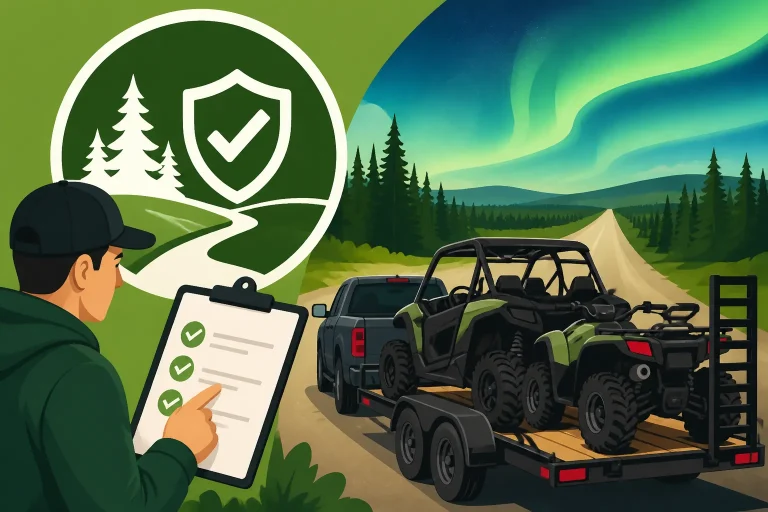
The safest approach is to confirm the deadline with the office responsible for the plate, then leave time for any steps that must happen in person. A renewal date printed on an old receipt or posted on an older notice can be useful, but it should not be your only source if the local process or rules may have changed.
Use this sequence:
- Read the permit and previous paperwork. Find the issuing authority, plate or permit number, expiry date and any renewal instructions. If the machine changed hands, check whether the paperwork actually belongs to the current owner.
- Contact the issuing office. Ask for the current expiry date, renewal window, payment methods, office hours and documents to bring. If the local authority publishes current instructions, use those rather than relying on a third-party summary.
- Confirm that the machine still qualifies. Ask whether the plate applies to the machine you own and to the locations where you intend to ride. A change in ownership, machine details or residence may affect what the office needs from you.
- Renew before the expiry date. Do not wait until the first planned ride of the season. If the office is closed, appointments are needed, or you have to provide additional information, an early check gives you room to sort it out.
- Keep proof of renewal. Save the receipt or confirmation and follow the issuer’s directions about displaying the plate or permit. If you are unsure whether an online payment has been processed, confirm before relying on it.
- Recheck the rules for your destination. A renewed local plate does not automatically cover a different municipality, a provincial park or land controlled by someone else.
If you cannot reach the office, avoid guessing based on another town’s deadline. Search the municipality’s official site or contact its main office when it opens. A local plate scheme is created and administered locally, so the relevant details may not be the same from one community to the next.
| What to confirm | Why it matters | Where to check |
|---|---|---|
| Expiry date | A plate may no longer be valid after its local deadline | Issuing municipality or district |
| Renewal process | The office may require a particular form, payment method or visit | Current local instructions |
| Plate coverage | A local permit may not apply outside the issuing area | Issuer and destination municipality |
| Ownership details | The plate may not automatically transfer when a machine is sold | Issuer and sale paperwork |
| Separate access rules | A municipal plate may not replace a park permit or land permission | Park office, land manager or landowner |
If your plate is from Lakeland, confirm the April 30 expiry and the current renewal instructions with the responsible local office before riding. For another scheme, do not assume that Lakeland’s date or process applies. The broader overview in Saskatchewan Municipal Plate Renewals can help explain why the issuing authority matters, while Registering With a Town Rather Than the Province explains the difference between a local scheme and provincial registration.
What happens if you miss the renewal date?
The consequences depend on the local bylaw and the area where you want to ride. A plate that has expired may no longer meet a municipality’s requirements for riding there. Continuing to use the machine without checking could lead to a ticket or other enforcement action under that local scheme. Do not assume that a grace period exists unless the municipality confirms one.
The deadline is especially easy to miss when a machine is stored for winter. A rider may think about renewing only when the ground dries or a group ride is planned, but a plate’s validity is set by its issuer, not by the start of the riding season. Put the date on a calendar and check the renewal process before the busy spring period.
If the deadline has passed:
- Do not rely on an expired plate as if it were current. Ask the issuing office whether you can renew, whether you need a replacement, and what rules apply until the renewal is complete.
- Do not ride into another municipality on the assumption that its rules are more flexible. Confirm that area’s requirements separately.
- Keep the old paperwork. It may help the office identify the permit, machine or prior owner, but it does not by itself prove that the plate is currently valid.
- Ask about enforcement before riding. If the authority says the plate must be renewed first, wait until you have confirmation rather than treating a pending payment as approval.
The legal and practical consequences are not the same everywhere. Some local plate schemes have specific fines or restrictions, while other areas may not operate a plate program at all. [Saskatchewan Fines for Riding Without a Plate] is relevant to schemes with local plate rules; check the bylaw that applies to your location before acting on a general description.
A plate also may not transfer with the ATV or UTV when it is sold. If you bought a used machine, do not assume the seller’s plate remains valid for you. Confirm with the issuing municipality whether the permit is tied to the owner, the machine, or a particular local use, and ask what paperwork is needed to obtain one in your name. Why a Plate Does Not Follow the Machine Surrendering a Municipal Plate When You Sell
Renewal is only one part of planning a ride
A current municipal plate can address one local requirement, but it is not a general authorization to ride anywhere. Before hauling the machine, check the rules at both the starting point and destination. A nearby municipality may use a different plate scheme, prohibit ATV use on certain streets, or have no local plate program at all. Riding in a Municipality With No Plate Scheme
Also check whether your route includes a provincial park, a trail managed by a club, private land or Crown land. Each may have its own access rules. A municipal plate does not replace a park permit where one is required, and it does not grant permission to cross private property. The relevant office or land manager can tell you what applies to that location.
Keep these items separate in your planning:
- Municipal plate or permit: A local authorization subject to the issuing authority’s rules.
- Provincial legal requirements: Rules that apply to ATV and UTV operation under Saskatchewan law, including applicable insurance and operating requirements.
- Land access: Permission or access conditions set by the landowner, land manager or trail operator.
- Park or trail paperwork: Any separate permit, acknowledgement or designated-trail requirement for that riding area.
If you are riding outside your home municipality, contact the destination authority rather than assuming your home plate is recognized. This is particularly important for visitors and riders planning a route that crosses multiple jurisdictions. Saskatchewan Visitors and Municipal Plates Does a Lakeland Plate Work at Candle Lake?
A simple pre-season routine prevents most renewal surprises: identify the issuer, confirm the expiry date, renew early, save proof, and check local access rules for every riding area. The date on the plate is only one part of the answer; the issuer and the place you plan to ride determine whether it will serve its purpose.
Disclaimer
This article is for general informational purposes only and does not constitute professional advice. Laws, prices and regulations vary by location and change over time. Consult a qualified professional for guidance on your specific situation.