Keeping a Rancher’s Phone Number in Your Pocket
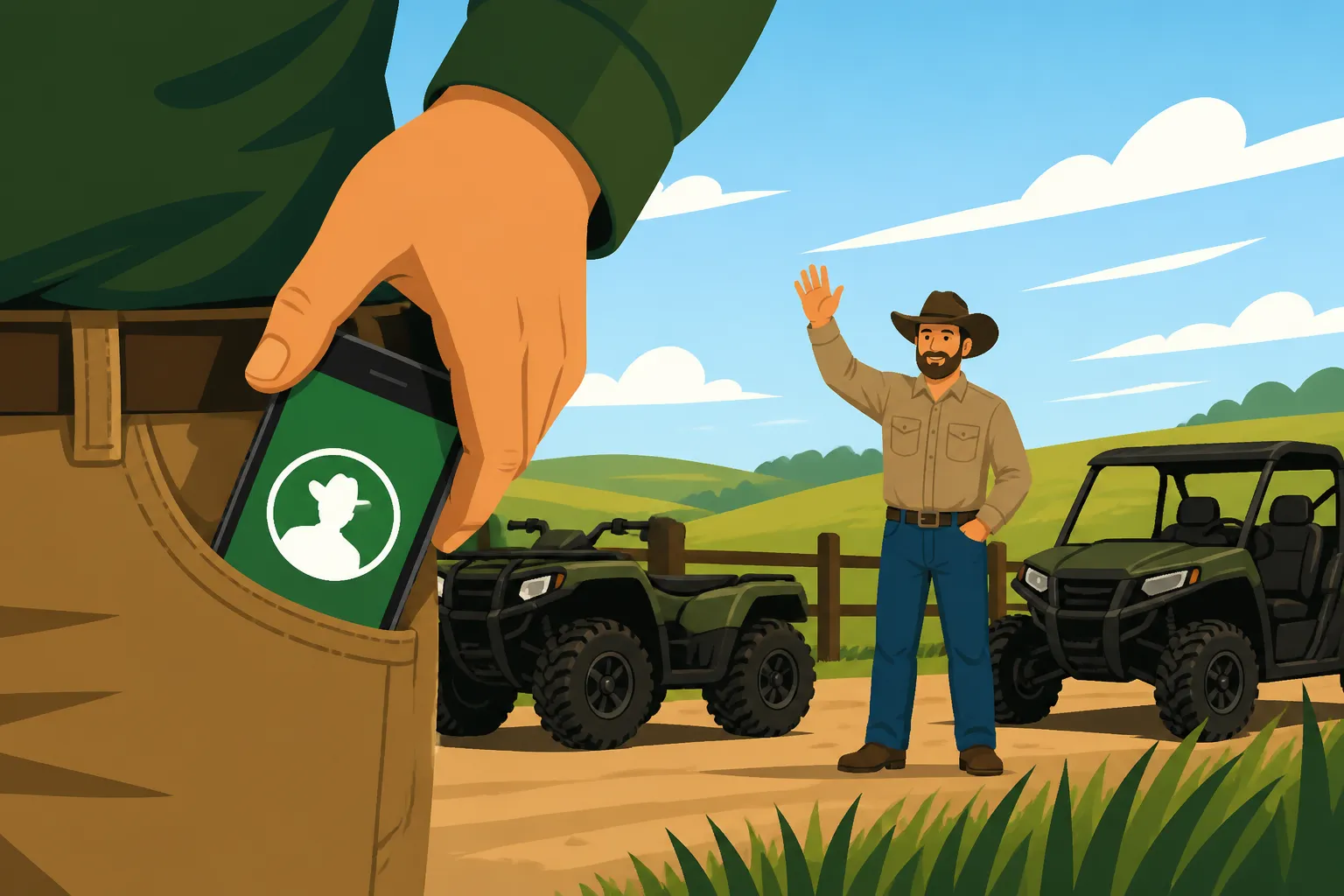
A phone number in your pocket can save a long ride from turning into an awkward conversation at a gate. On Saskatchewan grazing leases, though, having a rancher’s contact information is not the same as having permission to cross. Here’s how to ask clearly, confirm where permission applies, and keep the right details with you before you unload.
Why a rancher’s number matters
A grazing lease may look like open prairie, but it is land used to manage livestock and ranch operations. A track across it can lead riders past cattle, fences, water sources, or private improvements. Contacting the leaseholder before you ride helps avoid surprises and gives you a chance to ask whether your planned route is acceptable.
The number is especially useful when a trail or route approaches a gate, fence line, or area where it is not obvious who manages the land. It gives you a practical way to check before proceeding rather than guessing. It can also help you confirm that permission still applies if plans change, such as after a detour or a change in group size.
But a phone number by itself does not grant access. A number may be outdated, belong to someone who is not responsible for the lease, or connect you to a person who has not agreed to your route. Make sure you reach the right contact and receive a clear answer. The rules and responsibilities involved in access are covered in Saskatchewan Grazing Lease Permission and Getting Consent From a Grazing Lease Holder.
It also helps to separate land permission from other requirements. Permission from a leaseholder does not automatically make a closed trail open, cancel a municipal restriction, or satisfy a park permit requirement. Before riding, check the land-access rules, the route’s status, and any local restrictions that apply. Saskatchewan Crown Land Access Rules explains why access depends on more than whether an area appears to be public land.
Treat the phone number as a way to communicate, not as a pass. You still need to know where permission starts and ends, what activities it covers, and whether any other rules apply to the route.
How to ask for permission that is clear
A useful permission request gives the leaseholder enough information to make a practical decision. A vague “Can we ride out there?” leaves important questions unanswered: which area, what date, how many machines, and what route? Be specific enough that both sides understand what is being discussed.
Before contacting the rancher, note:
- The location or route you want to use, described as clearly as you can.
- The day and approximate time you plan to ride.
- How many riders and machines are in your group.
- Whether you expect to cross a gate, use a road or trail, or pass near livestock.
- Your name and a number where the leaseholder can reach you.
Then ask directly whether that route and activity are okay. If the answer is conditional, repeat the conditions back so you know you understood them. For example, permission might apply only to a particular route, a specific time, or a group size. Do not assume that an informal yes covers a different route or another visit.
| What to confirm | Why it matters | What to note |
|---|---|---|
| The person’s role | A contact may not be the leaseholder or the person responsible for access decisions | Name and how they are connected to the area |
| The permitted area | “The lease” may cover more land than the route you discussed | Route, landmarks, or boundaries |
| Date and timing | Conditions or livestock movements may change | Date and any time limits |
| Group and machines | A larger group can have a different impact from one rider | Number of riders and machines |
| Gates and fences | Riders need to know how the leaseholder expects them to be handled | Which gates to use and whether they should be left as found |
| Other conditions | Permission may come with limits on speed, stopping, or proximity to livestock | Any specific instructions |
If the rancher cannot give permission for the route, thank them and do not treat silence or uncertainty as approval. Ask whether there is another route they would allow, or choose a route where access is established. You can also check Saskatchewan Crown Land Riding Permission for the broader permission question and Saskatchewan Private Land Permission when a route may cross private land rather than a grazing lease.
A short written confirmation can help prevent misunderstandings. A text or email that states the area, date, number of riders, and conditions is useful to refer back to. It does not replace any formal permit or legal requirement, but it makes the agreement easier to remember accurately. If permission is given by phone, write down the date, the person’s name, and what they said as soon as practical.
What to carry and how to use the contact
Save the number in your phone with a clear label, such as “lease contact” and the area it relates to. Keep the contact details with your route notes rather than relying on memory. If your phone has no signal in the riding area, the number may not help during the ride, so make the call or send the message before leaving coverage.
A paper backup can be useful, especially for a group ride. Write down the contact name, number, area, and key conditions on a small card or in a notebook. Keep it somewhere protected from rain and mud. A waterproof card sleeve or small notebook is one option; if you shop for one through Amazon, check that it can be secured and read easily with your riding gear on. A phone number written on a loose slip can be lost or damaged before you need it.
Share the relevant details with the other riders. The person who spoke with the rancher should tell the group what was agreed, including route limits and gate instructions. If riders split up, everyone should know the boundaries. Do not assume that permission given to one person will be understood by the rest of the group.
When you arrive, compare the route you discussed with what you see. If a gate is locked, a sign indicates a restriction, livestock are in the area, or the route looks different from what you were told, stop and reassess. A previous conversation is not a reason to force a gate, ignore posted information, or continue into a situation that appears unsafe. If you can reach the leaseholder, ask before changing the plan. If you cannot, turn back or use another route with confirmed access.
The phone number is also useful for asking about changing conditions before you set out. Ranch operations can change: cattle may be moved, a gate may need to stay closed, or work may be underway. A quick check close to the ride date can prevent you from relying on permission that no longer fits the situation. For broader route planning, Reaching a Rancher Before You Cross Their Lease and Saskatchewan Trail Conditions Before You Haul offer related considerations.
Keep permission separate from riding rules
Access permission answers one question: whether the person responsible for the land agrees to your planned use. It does not answer every question about riding legally or safely. You may still need to follow provincial rules, municipal bylaws, park requirements, and any restrictions applying to the specific route.
Before the ride, check whether the route crosses a municipal area with its own rules, a designated trail, or land subject to a temporary closure. A leaseholder’s permission should not be treated as authorization to use every road, ditch, trail, or adjacent parcel along the way. If you are uncertain about a boundary, ask before riding across it.
Keep in mind that a conversation can be misunderstood. Be explicit about whether permission is for a one-time crossing or repeated access, and whether it covers every machine in your group. If someone else will lead the ride, make sure they have the contact details and the conditions—not just the assurance that “we have permission.”
Before departure, run through this short checklist:
- Identify the area and the person responsible for access.
- Contact them before riding and describe the route, date, and group.
- Get a clear answer and note any limits or conditions.
- Save the contact details and share the agreement with the group.
- Check signs, gates, and conditions when you arrive.
- Follow other rules that apply, even when land permission has been granted.
Keep proof of insurance and any required permits separate from the land-access notes. They serve different purposes. For example, Saskatchewan Insurance Requirements for Riders covers insurance, while Saskatchewan Crown Land Riding Permission addresses land access. A phone number is helpful, but it does not stand in for either.
If you cannot confirm access, do not ride on the assumption that a quiet area is open to you. Turn around, choose a route with confirmed permission, or contact the relevant land manager before returning. Carrying a rancher’s number is a simple preparation step; using it respectfully and confirming the exact terms is what makes it useful.
Disclaimer
This article is for general informational purposes only and does not constitute professional advice. Laws, prices and regulations vary by location and change over time. Consult a qualified professional for guidance on your specific situation.