Saskatchewan Permit Questions Parks Hear
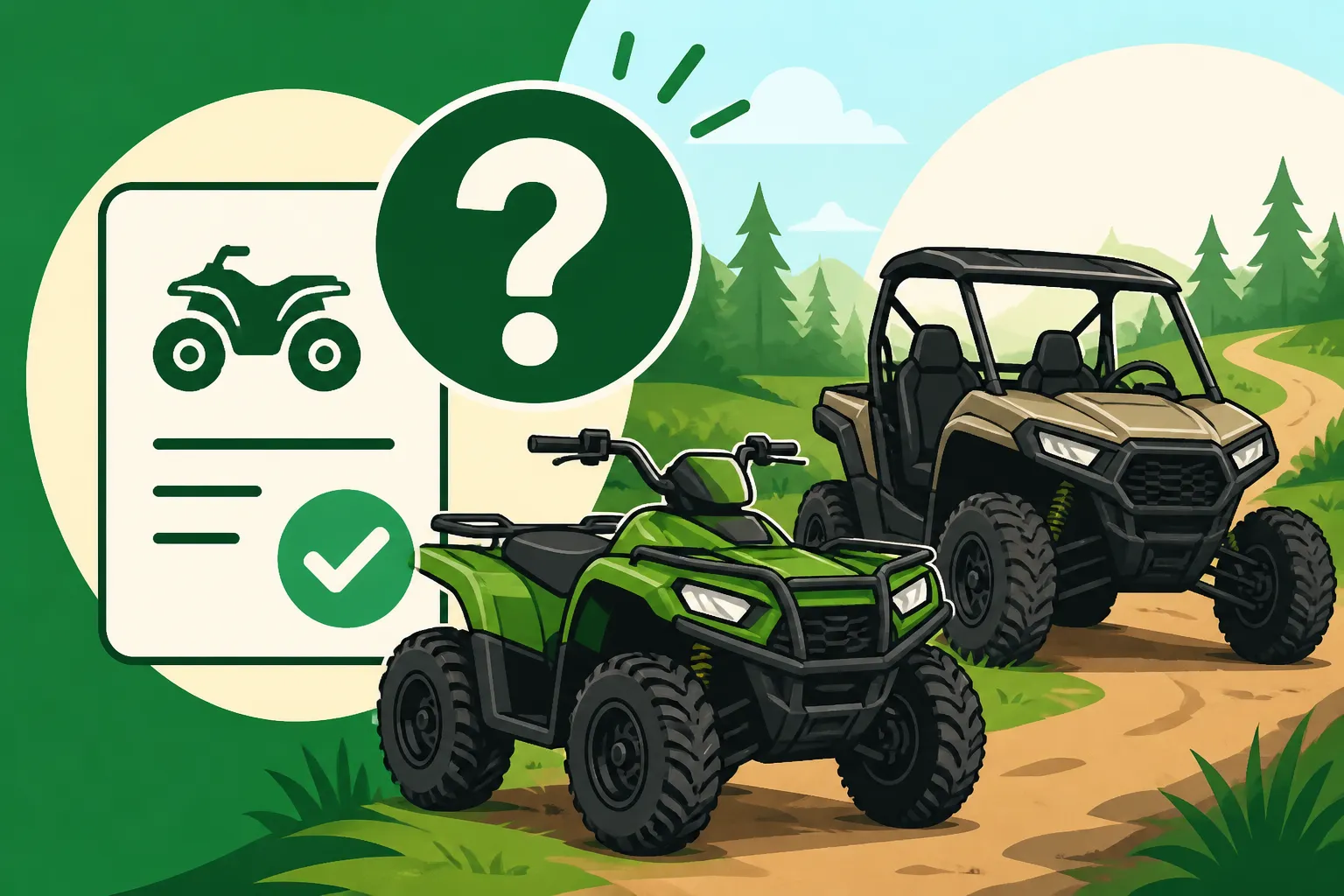
Park permit questions often come up when riders are already planning a trip: Is a permit required, where do you get one, and does it cover every trail? In Saskatchewan, the answer depends on the park and its rules. Here’s how to check the requirements, complete any required steps, and avoid arriving at a trailhead unprepared.
First, find out whether your destination requires a permit
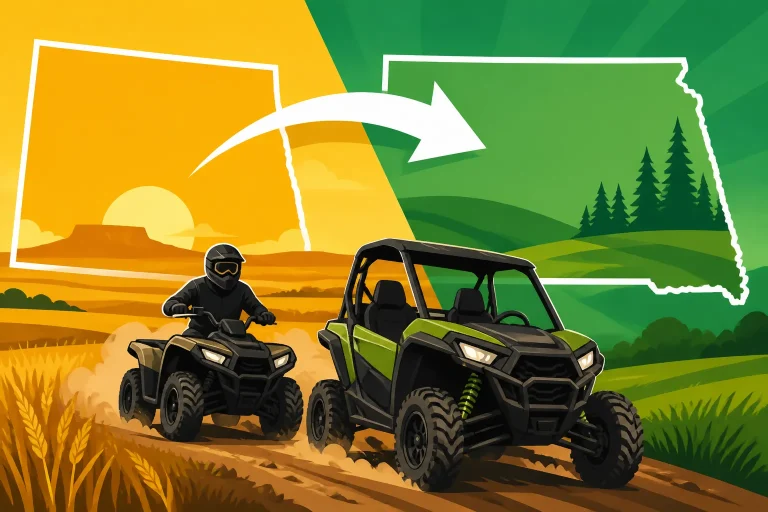
There is no single Saskatchewan ATV permit that automatically covers every provincial park or trail. A park may require a permit for designated machine routes, while a different area may have other access rules. Check the specific park’s current instructions before you haul your machine.
Moose Mountain and Great Blue Heron are two parks where riders should ask about trail-permit requirements. The permits available at these parks are described as free, but “free” does not mean there is nothing to do: a park may require an information session or a signed use acknowledgement before issuing one. Confirm the current process with the park rather than assuming that a past visit, another park’s permit, or a municipal plate is enough.
Some parks allow machines only on designated trails. That restriction matters even if you have completed the permit process: permission to ride in the park is not permission to take any route you choose. Roads, hiking trails, beaches, campgrounds, boat launches, and other areas may have separate restrictions or be closed to machines. Review Saskatchewan Parks With Designated Trails Only and the park-specific rules before deciding where to ride.
A park trail permit is also different from provincial ATV registration. Saskatchewan does not issue a general provincial ATV registration or plate. A municipal plate, where available, is a local scheme and does not replace a park’s permit or authorize riding on a closed trail. For the broader distinction, see Saskatchewan Has No Provincial Trail Pass and Saskatchewan Municipal ATV Plates Explained.
| Question | Practical answer |
|---|---|
| Does one permit cover every Saskatchewan park? | No. Check the rules for the park and riding area you plan to visit. |
| Do Moose Mountain and Great Blue Heron have trail permits? | Riders should confirm each park’s permit process and complete its required steps. |
| Is a permit the same as an ATV plate? | No. A park permit and a municipal plate serve different purposes. |
| Does having a permit mean every route is open? | No. Stay on routes designated for machines and follow closures and signs. |
| Should you bring insurance and ownership information? | Yes. Carry relevant documents and be ready to show proof if requested. |
If you are uncertain whether a particular route is open, ask the park office before unloading. A route shown on an old map, remembered from a previous season, or suggested by another rider may not reflect current designations or closures. Start with Saskatchewan Permit Questions Riders Ask if you need a broader overview of how park permits fit into the rules.
How to get a permit and complete the required steps
The practical steps can differ between parks, so use the park’s own instructions. At Moose Mountain and Great Blue Heron, riders should check whether an information session and use acknowledgement are part of the process. Do not treat a permit obtained at one location as automatically valid at another.
A sensible preparation sequence is:
- Choose the park and confirm machine access. Check that the park has routes open to ATVs or UTVs and that your intended riding area is included.
- Ask how the permit is issued. Find out whether you need to visit an office, attend an information session, complete a form, or take another step before riding.
- Complete the required acknowledgement. Read the conditions rather than signing without checking what routes, conduct, or safety obligations they cover.
- Get and display the permit as directed. Follow the park’s placement instructions, and ask staff if you are unsure what must be visible.
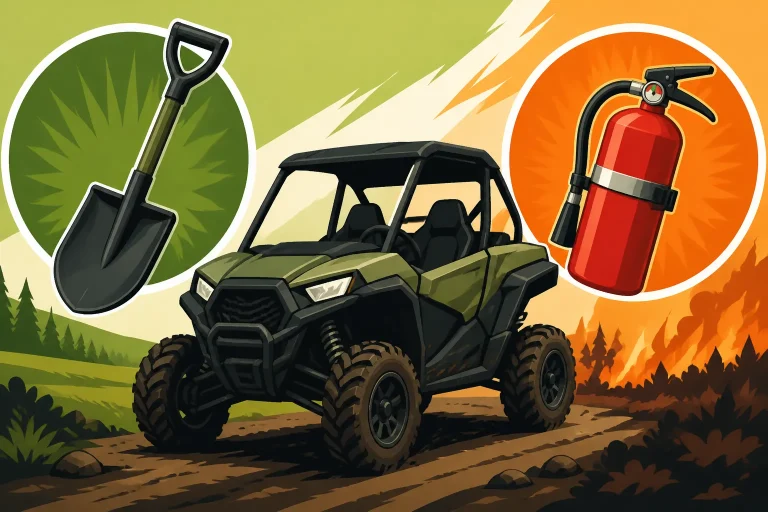
- Recheck conditions close to departure. Fire restrictions, temporary closures, trail work, or other changes can affect access after you have made your plans.
For an overview of the process, see How to Get a Saskatchewan Park Trail Permit. The information session may be a required part of obtaining a permit at a particular park, not a universal class that grants permission everywhere. The Info Session That Comes Before Your Permit explains why it is worth confirming that step before setting off.
The acknowledgement form is not just a receipt. Treat it as a reminder to follow park-specific conditions, including staying on designated routes and respecting closures. If the park asks you to sign a form at an office, complete that step before riding rather than planning to resolve it at a trail junction. See Signing the Use Form at a District Office for the paperwork question.
If you are deciding between parks, compare the rules before you book a campsite or organize a group. Moose Mountain and Great Blue Heron have different trail networks and may have distinct permit arrangements. Their mileage and trail layout are not interchangeable, and neither park’s permission should be assumed to apply elsewhere. Check Saskatchewan Permit Rules at Moose Mountain and Saskatchewan Permit Rules at Great Blue Heron for the park-specific questions to raise.
One useful question for staff is: “What exactly does this permit allow me to ride today?” That invites a clearer answer than simply asking whether the park is open. Confirm the permitted machine types, designated routes, any seasonal limits, whether the permit needs to be displayed, and whether there are other steps for youth riders or organized groups.
What to carry and what the permit does not replace
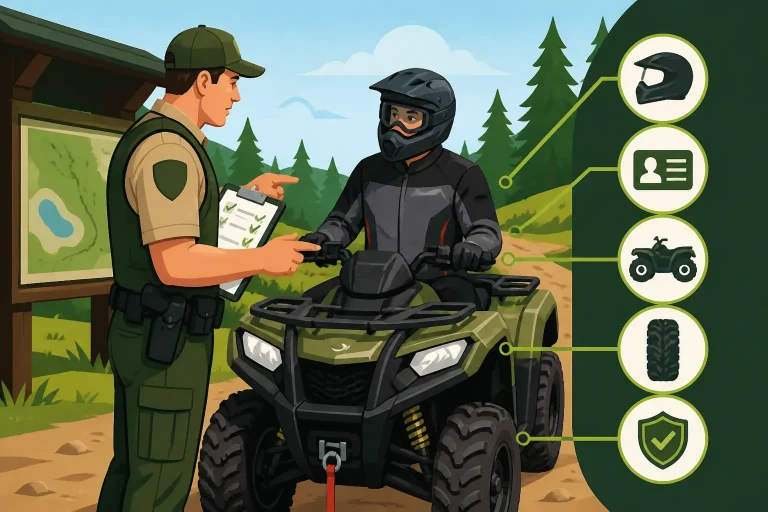
A permit is only one piece of the ride plan. Keep any permit or acknowledgement where you can show it, and carry the other documents that may be relevant to operating your machine. Park staff or an officer may ask for proof of insurance, and riders should be ready to provide it. See Saskatchewan Insurance Proof at a Park Office for more on that question.
Also carry information that helps establish which machine you are riding and who owns it, especially if the machine was recently bought or borrowed. Saskatchewan does not maintain a provincial ATV registration system that supplies a standard registration document for every quad. A bill of sale or other ownership record can help explain the machine’s ownership. Saskatchewan Proof of Ownership on the Trail covers what riders can keep available.
A practical document check before leaving home:
- Park permit and any signed acknowledgement, if required
- Proof of insurance
- Bill of sale or another useful ownership record
- Contact information for the park office or local authority
- A map showing the routes designated for machines
Keep documents protected from water, mud, and damage. A small waterproof pouch can help keep paper copies legible; if you shop on Amazon or elsewhere, choose a pouch that closes securely and fits the paperwork you actually carry. A phone photo can be a helpful backup, but do not assume it replaces a document the park specifically requires you to display or present.
Most importantly, a permit does not turn a closed route into an open one. Follow posted signs and staff directions, and stay within the routes allowed for machines. A permit also does not replace insurance, equipment requirements, age and supervision rules, or any other laws that apply to the ride. For example, a park permit does not itself authorize road riding; that depends on the applicable road rules and local bylaws. See Saskatchewan ATV Road Rules Explained if your route includes a road or crossing.
If your group includes children or young riders, do not assume that a permit settles the supervision question. Park rules and general operating rules may impose requirements beyond the permit process. Check the age and supervision rules for the rider and the specific park before the trip. It is easier to resolve that at the planning stage than at the trailhead.
Questions to ask before you load the trailer
The most useful permit questions are specific to your trip. Instead of asking only, “Do I need a permit?”, explain which park you are visiting, what kind of machine you have, who is riding, and which trail area you want to use. That makes it easier for staff to point you to the right conditions.
Ask:
- Is this park currently open to ATVs or UTVs?
- Which routes are designated for machines, and are any closed?
- Is a permit required for my planned ride?
- Do I need to attend an information session or sign a use form first?
- Where do I pick up or complete the permit?
- Must the permit be displayed on the machine, and where?
- What proof of insurance or ownership should I carry?
- Are there additional conditions for youth riders or organized groups?
- Are fire restrictions or temporary closures affecting access?
- Does a local plate or permit have any relevance here, or is a separate park permit required?
For an organized ride, ask well ahead of time whether there are additional conditions for group use. Do not assume that a permit issued to an individual rider automatically covers an event, a large group, commercial guiding, or a route outside the designated network. If the ride has a leader, make sure the whole group knows which trails are open and where to stop if conditions change.
Before leaving, check current park information again and make sure the information matches the area you are visiting. Save the park office contact details, carry a map, and avoid relying on a single online post or an old screenshot for closure information. If there is uncertainty at the trailhead, pause and ask staff rather than treating a permit as blanket permission.
The simplest way to avoid a wasted trip is to confirm three things in advance: whether the park allows your machine, what permit steps apply, and which routes are open. Then carry the permit and supporting documents, follow posted restrictions, and remember that park access is specific to that park—not a province-wide pass.
Disclaimer
This article is for general informational purposes only and does not constitute professional advice. Laws, prices and regulations vary by location and change over time. Consult a qualified professional for guidance on your specific situation.